Part 1: The Woman at Register Six
A stranger was mocking my eighty-three-year-old mother for holding up the checkout when the cashier suddenly stopped everything. She studied Mom’s face, asked her name, and locked the register.
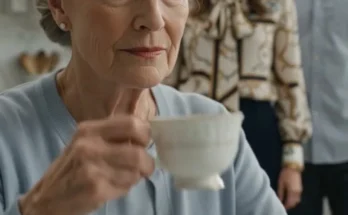
Until then, it had been an ordinary Saturday shopping trip. Mom still insisted on choosing her own groceries, and we had only six items to pay for.
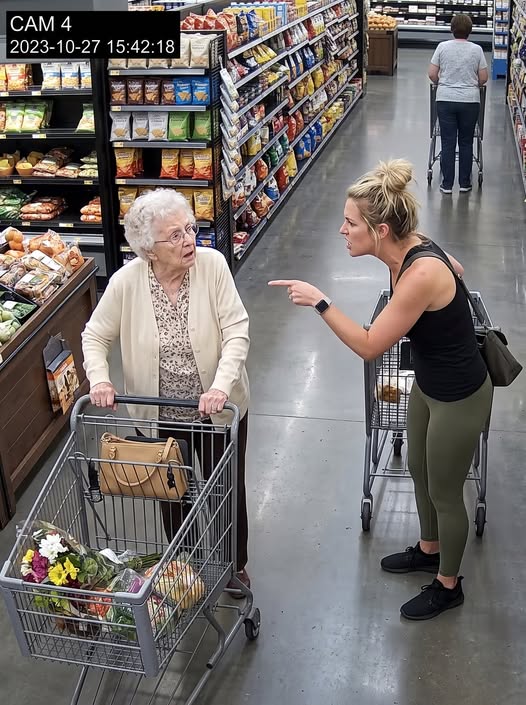
But her wallet had slipped somewhere inside her purse. As she searched with trembling hands, the woman behind us pushed her overflowing cart forward.
“If shopping is too difficult at your age, perhaps you should stay home.”
I turned to object, but Mom touched my arm. “Let it go, Natalie.”
She apologized and finally found her card. The woman made another impatient remark just as the cashier looked up.
Her name tag read Diane. After asking Mom’s first and last names, she switched off the conveyor belt and called the manager to register six.
“Please stay here,” she told us.
Mom looked at me, confused. Diane asked her age, then covered her mouth when she heard the answer.
The manager, Paul, arrived within two minutes. After a whispered conversation, he went to the office and returned carrying a battered cardboard box.
When the impatient customer complained again, Diane directed her to register four. The woman left, but Mom barely noticed.
Diane set the box beside our groceries. “My mother died seven months ago. I’ve kept these things here ever since.”
Mom offered her condolences. Then Diane said her mother’s name: Rose.
Mom dropped her wallet. While I retrieved it, she gripped the counter and asked Diane to repeat herself.
“She spent years wondering where you were, Eleanor,” Diane said. “She had a photograph of you. That’s how I recognized you.”
Mom stared at her. “Rose had a daughter?”
Diane nodded, her eyes filling. I looked between them, trying to understand.
When I asked who Rose was, Mom answered in a voice I barely recognized. “A child I loved.”
Diane opened the box, and I realized our grocery trip had uncovered a part of my mother’s life she had never shared with me.

Part 2: The Girl in the Photograph
The first photograph showed Mom outside a small white house, holding hands with a girl whose dark hair was braided. Mom looked no older than twenty-five.
Rose was her niece. After Mom’s sister died, six-year-old Rose came to live with her because her father, George, was frequently away for work.
What began as helping her sister’s child became almost six years of raising her. Mom spoke of Rose with an affection that made me wonder how I had never heard her name.
Diane produced another photograph. This one showed Mom holding a newborn wrapped in a yellow blanket, and I recognized it from our family album.
“That’s me.”
On the back, Mom had written my name and age: six days old. Beneath it, Rose had added a sentence suggesting I was the baby Mom had chosen over her.
Mom nearly lost her balance. I supported her while Diane brought a chair.
“She misunderstood,” Mom whispered, pressing the photograph against her chest. “I never wanted her to think that.”
Paul offered us his office, but Mom wanted to continue immediately. Around us, customers carried on shopping while she began explaining what had happened before I was born.
Her pregnancy had been difficult. My father worked two jobs, bills were overdue, and she often felt too ill to manage the household.
George offered to take Rose for the summer. Mom initially refused, but one evening, overwhelmed by a broken refrigerator, expenses, and exhaustion, she cried to my father about coping with two children.
Diane quietly interrupted. “Rose heard you that night.”

Part 3: Two Different Meanings of Goodbye
The following morning, twelve-year-old Rose insisted on moving in with her father. Mom argued, then reluctantly accepted what she believed was Rose’s wish to live with him.
Diane explained that Rose had been trying to make things easier. She thought leaving would spare Mom the burden of caring for her alongside a new baby.
“I believed she needed her father,” Mom said.
“She hoped you would insist she belonged with you.”
Mom began crying, and I put my arms around her. A decision she had understood one way for decades suddenly meant something entirely different.
She had called repeatedly after Rose left. George said Rose wouldn’t speak to her and advised her not to visit, claiming it would interfere with the girl’s adjustment.
Rose had indeed refused the calls, Diane explained, but she had still expected Mom to come. At twelve, she believed being wanted meant someone would refuse to let her go.
After my birth, Mom sent the photograph with a four-page letter. She had written that Rose’s room was waiting and that she now had a little sister.
Diane looked startled. Her mother had received only the photograph.
George had moved, and the forwarded envelope arrived damaged inside a postal bag. Somewhere along the way, the letter had disappeared, leaving Rose with an image she interpreted as proof that she had been replaced.
Mom later sent a birthday card. Diane found its envelope in the box, with return instructions written across it in Rose’s handwriting.
Rose had sent it back hoping Mom would try again. Mom had taken it as a request to stop.
“I thought I was honoring her decision,” she said.
Diane wiped her eyes. “She thought you had given up.”

Part 4: What Rose Eventually Understood
Over the years, both families moved, and Rose married and changed her surname. Hurt became fear, and each woman avoided seeking an answer she worried would confirm her worst belief.
Mom said she remembered every birthday. Diane told her Rose had done the same.
I studied the photograph of myself and asked whether Mom had kept silent to spare me guilt. She explained that she never wanted me to feel like a replacement—or to imagine she regretted having me.
“Loving you didn’t take away what I felt for Rose,” she said. “But the longer I said nothing, the harder it became to explain.”
Diane assured me that Rose’s feelings toward me had changed as she grew older. Then she untied a bundle of photographs, addresses, and notes.
Rose had made occasional attempts to find Mom. There were possible surnames, outdated addresses, a later photograph, and a letter returned from a house Mom had already left.
At the bottom lay something Rose had written during her illness. Mom couldn’t bring herself to take it, so Diane read the important passages aloud.
Rose no longer blamed her. Becoming a mother had helped her understand that someone could love a child deeply and still make a painful mistake.
Then Diane looked at me. “She used to call you her little sister.”
I had spent my life unaware of her existence. Somewhere, a woman I had never met had thought of me as family.
Mom asked whether Rose had hated her. Diane said she had been angry for years, but the affection had never disappeared.
Before dying, Rose had asked Diane to pose one question if they ever found Mom: had Mom believed Rose no longer wanted her?
“Yes,” Mom answered. “But I would have gone anywhere if I’d known she needed me.”
Diane squeezed her hand. That was what Rose had hoped, though she had died before hearing it.
Nothing in the box could restore their lost decades. It could only give Mom an answer she had carried for more than fifty years.
Part 5: No Need to Hurry
Eventually, Mom looked toward the conveyor belt. She said she would like to finish buying her groceries, and Diane reopened the register.
The bread, milk, tea, apples, soup, and small chocolate cake were still waiting. Mom always claimed the cake was for visitors, though she usually enjoyed it herself.
When it was time to pay, her hands shook again. She missed the card slot twice and immediately apologized.
I saw the embarrassment return to her face. She seemed to be remembering the stranger who had made her feel she no longer belonged in an ordinary checkout line.
Diane steadied the reader without taking the card away. Mom tried again and managed it.
“There’s no rush,” Diane told her.
Mom gave a small, tearful smile. “You’ve already waited so long.”
Diane covered her hand and assured her she didn’t need to apologize. Mom laughed through her tears.
After we finished, Diane accompanied us outside. Beneath the awning, Mom examined Rose’s writing on the photograph once more.
She wished she could explain that Rose had never been replaced. Diane stood close beside her as she said it.
Mom reached up and touched Diane’s cheek. They remained there for a moment, looking at each other.
Before we left, Mom handed me the photograph and asked me to keep it safe. I promised I would.
Then she took Diane’s hand. Her fingers were still trembling, but this time, no one asked her to hurry.