THE SLOW EVAPORATION OF SELF
My mother didn’t leave me in a single, dramatic exit. She faded—quietly, almost politely—like a lamp being dimmed by an invisible hand, one notch at a time.
At first, we called it “senior moments.” Keys discovered in the freezer, the humming of a song she couldn’t name, the same story about a childhood dog told three times in a single lunch. We laughed then. We used humor as a shield against the creeping shadows. But the laughter died the afternoon she paused in the middle of her own living room, studied my face with a warm, heartbreaking uncertainty, and asked me if I lived in the house next door.
The diagnosis was delivered in the sterile, hushed tones doctors use when they are handing you a life sentence. Progressive. Unpredictable. Irreversible. My siblings, ever the pragmatists, reacted with the cold efficiency of a board of directors. They spoke of “managed care facilities,” “tiered waiting lists,” and “actuarial costs”—numbers passed back and forth like stock options. I stayed silent because I already knew the answer. I couldn’t outsource her fear. I couldn’t hand the woman who had taught me to walk over to a rotating shift of strangers.
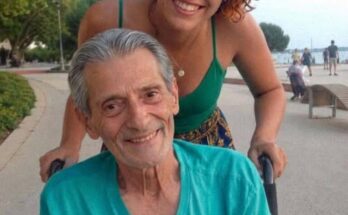
So, I brought her home.

THE NARROWING OF THE WORLD
People warned me. They said love without recognition eventually curdles into resentment. They told me I was sacrificing my “prime years” for a woman who would soon view me as a pleasant intruder. I listened—and I stayed.
Caring for her didn’t just change my life; it dismantled it. My career, once a source of pride, was trimmed, then pruned, then finally uprooted altogether. My bank account drained into a steady stream of specialized prescriptions, safety rails that scarred the hallways, and modified meals that she often forgot to eat. My world narrowed to the four walls of our home and the fragile geography of her moods.
There were “sunlight days,” where she would hum melodies from the 1950s, her eyes soft and lucid as she watched the dust motes dance in the air. Then there were the “shadow days,” where she was a frightened child trapped in an aging body, weeping for a mother who had been dead for forty years.
My siblings called on holidays. Their visits were rare, brief, and marked by a visible discomfort with the smell of antiseptic and the repetitive nature of her questions. They saw a burden; I saw a woman who still relaxed her shoulders the moment I took her hand. That had to be enough.
THE FINAL SILENCE
She died the way she had lived her final years: gently, without drama, just as the first bruised light of dawn touched the windows. I was there, as I had been for a thousand nights before, holding her hand as the last thread of her breath finally unspooled.
Afterward, the house was suddenly full of people again. My siblings returned for the logistics of death. The will was read in a lawyer’s office that smelled of stale coffee. Everything was divided with surgical precision—exactly as she had arranged decades before her mind began to unravel.
I didn’t protest. I didn’t present an invoice for the years of lost wages or the nights I spent sleeping on a rug beside her bed. Grief had already emptied me of the need for equity. Peace felt more valuable than being understood. But when they left, the house felt more than empty. It felt hollow. The purpose that had governed every second of my existence had vanished into the morning mist.
THE HIDDEN RECORD OF LOVE
Three days after the funeral, my phone rang. The man on the line was a stranger, a former colleague of my mother’s from a life she had lived before I was even born. His voice was reverent.
He told me that in the very early stages of her illness—during those weeks when she still held the keys to her own mind—she had come to him with a single, desperate request. She knew the fog was coming. She knew the darkness would eventually swallow the names of the people she loved most.
It wasn’t a hidden fortune or a secret estate. It was a modest account she had quietly placed in my name—not as “payment” for my time, but as a safeguard for my future. Along with it was a letter, written in her steady, elegant cursive before words became too heavy for her to hold.
“I am writing this while I still know who you are,” the letter began. “I know what the coming years will ask of you. I know you will choose to stay. Thank you for your patience. Thank you for your gentleness. Thank you for being my memory when I can no longer find my own.”
That was when the lesson finally landed. Memory may be a biological function that can fail, but love is a spiritual record that remains indelible. What I gave her mattered, even when she couldn’t name the giver.
I stood in the quiet house, the letter pressed against my chest, and for the first time in years, the silence didn’t feel like a weight. It felt like a benediction. I had chosen rightly. And that, at last, was enough.