The second time, nobody was supposed to know.
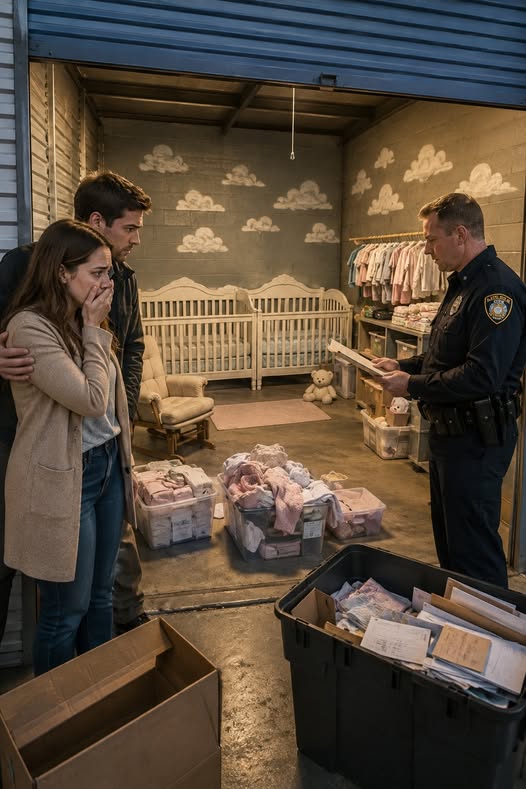
Nine months later, when police rolled open the metal door of Storage Unit 214 and showed me the nursery hidden inside, I finally understood something that still makes my stomach turn.
Melissa hadn’t simply become obsessed with my twins.
Someone had been helping her prepare for them.
And that person had been closer to me than I ever imagined.
The trouble began at Melissa’s baby shower.
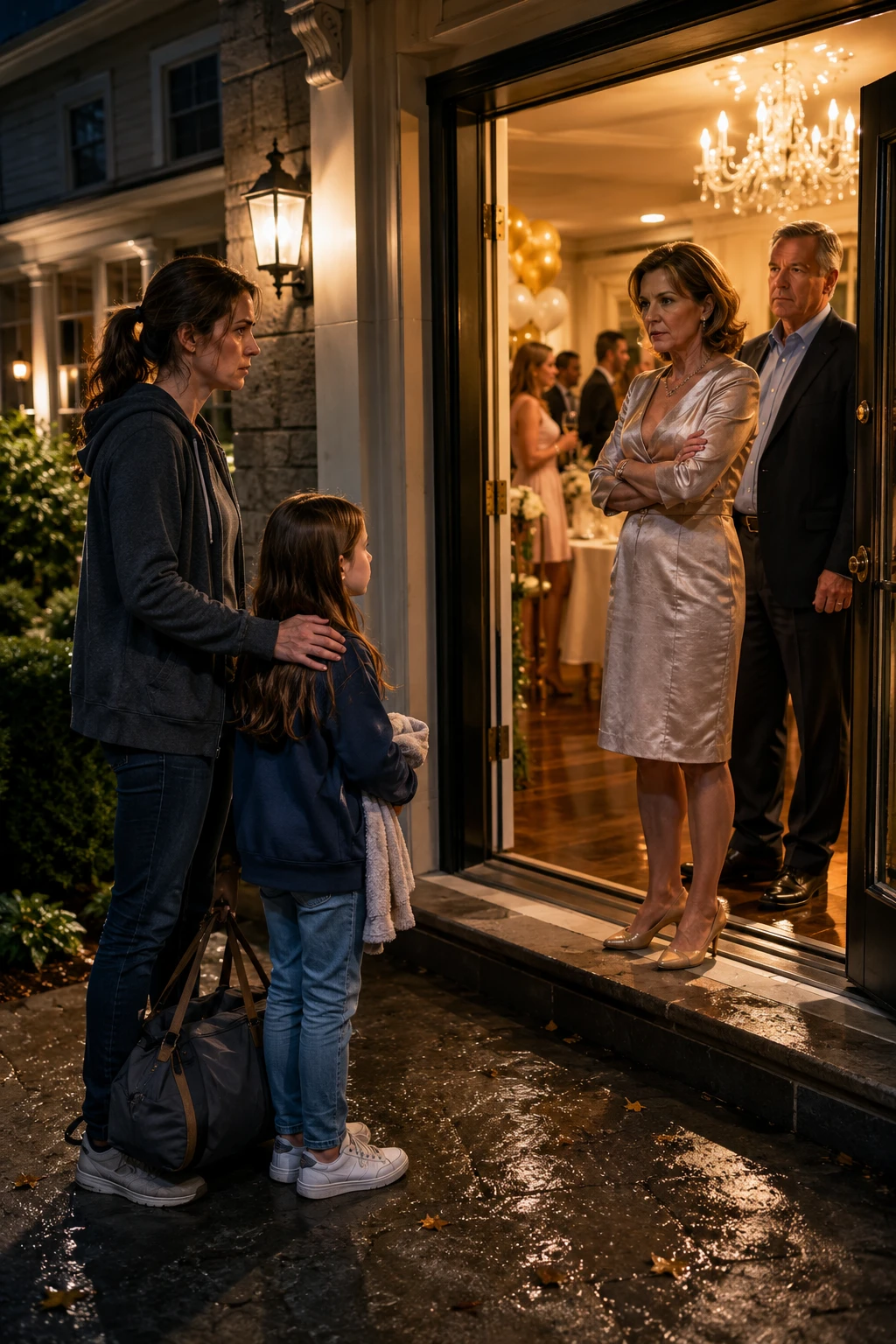
My mother, Lorraine, was standing beside the cake with a champagne glass raised when she smiled directly at me.
“And soon this family will have even more blessings,” she announced. “Because Kendra’s carrying twins.”
For a second, I couldn’t breathe.
Thirty people turned toward me.
I was sixteen weeks pregnant after two years of fertility treatments, one chemical pregnancy, thousands of dollars in medical bills, and more nights crying in our bathroom than I could count.
But I had begged Mom not to tell anyone yet.
Especially Melissa.
She was thirty-four weeks pregnant, and this was supposed to be her day.
I’d told Mom exactly that.
Her day comes first.
I’d even trusted her with the names Travis and I had chosen.
Harper and Hazel.
Mom had promised.
Across the room, Melissa shot out of her white armchair so fast that tissue paper slid off her lap.
Her face looked wrong.
Not jealous.
Not surprised.
Furious.
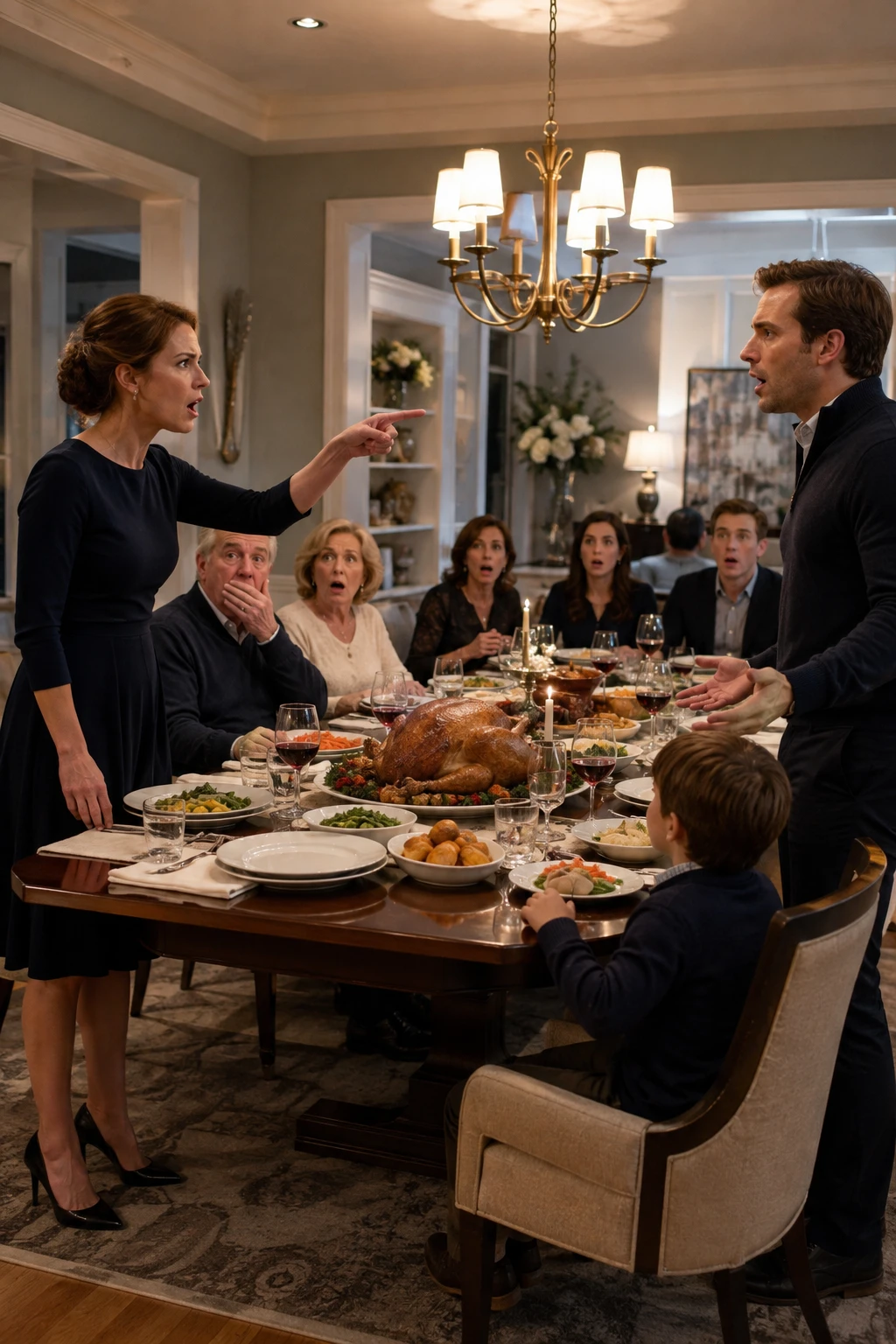
She crossed the room, grabbed the long silver cake knife from beside the cake, turned around, and pointed it straight at my stomach.
“This is my day!”
My hands flew instinctively over my belly.
“Melissa, put it down.”
She took another step.
“Please,” I said. “Calm down.”
Then her expression changed.
The anger disappeared, replaced by something almost hollow.
Her voice dropped.
“You stole my life and my babies.”
Babies.
Plural.
That word lodged in my brain before anything else did.
Melissa was supposedly pregnant with one baby.
And only one person besides Travis knew that I was carrying two.
Our mother.
Aunt Carol grabbed Melissa from behind.
The knife clattered onto the cake table.
Someone screamed.
My mother rushed toward Melissa instead of me.
I didn’t wait to hear what she said.
I found Travis, grabbed my coat, and left.
We sat in his truck in silence.
He gripped the steering wheel but didn’t start the engine.
Finally, he looked at me.
“Did you hear her?”
I nodded.
“She said babies.”
“I know.”
“How did she know?”
I stared back through the windshield at the balloons bouncing above the front porch.
“I told Mom.”
That was the first moment I realized my mother’s promise might not mean anything.
May you like
It wasn’t the last.
Mom called at 7:02 the next morning.
I expected an apology.
Instead, she said, “Melissa is in a very fragile place, Kendra.”
“She pointed a knife at me.”
“It was a cake knife.”
I actually pulled the phone away from my ear.
“Are you serious?”
“Nobody was hurt.”
“You announced my pregnancy.”
“I was excited.”
“You promised me.”
She sighed.
Then came the sentence that changed our relationship permanently.
“It was her day, Kendra.”
Something inside me went quiet.
I’m a pediatric nurse at Mercy General.
Eight years in a hospital taught me that when something goes wrong, memory becomes unreliable very quickly.
People revise conversations.
Times get confused.
Details disappear.
So I did what nurses are trained to do.
I documented.
February 9: baby shower. Knife. Exact words. Thirty witnesses.
February 10, 7:02 a.m.: Mom minimized incident. No apology.
Three days later, Aunt Carol called.
She sounded uncomfortable.
“Kendra, I think you should know something.”
Melissa had been telling relatives about my twins before the shower.
She’d also been telling them I’d exaggerated my fertility problems for sympathy.
According to Melissa, I’d gotten pregnant because I couldn’t stand seeing her receive attention.
Nobody should have known about my fertility treatments.
Except Travis.
And Mom.
Months earlier, I’d broken down at Mom’s kitchen table after another failed cycle and told her everything.
I wrote another line in my notebook.
Mom let it slip.
I underlined it twice.
Because at that point, I still desperately wanted carelessness to be the explanation.
Then March arrived.
And carelessness stopped making sense.
White funeral lilies appeared on my front porch.
No card.
No sender.
Three days later, newborn diapers I hadn’t ordered arrived cash-on-delivery.
Then someone began calling Mercy General asking which shifts “Nurse Hensley” worked, claiming to be arranging a surprise.
I almost dismissed it.
Until I noticed the dates.
The lilies arrived the morning of my sixteen-week appointment.
The diapers matched the date of my blood work.
The hospital call came hours after Riverbend Women’s Health rescheduled my anatomy scan.
I sat in the break room with a cup of cold coffee and stared at my notebook.
Then I wrote:
It’s like she has my calendar.
The last Friday in March, I arrived at Riverbend for my rescheduled scan.
Melissa was sitting in the waiting room.
Cream sweater.
Hair curled.
Hands resting on her enormous belly.
When she saw me, she smiled.
“Small world.”
My skin went cold.
My new appointment time existed in three places.
My phone.
Travis’s phone.
My medical chart.
“What are you doing here?” I asked.
“Appointment.”
“What time?”
Her smile widened.
“Why does it matter?”
Instead of arguing, I went directly to reception.
Melissa had no appointment that day.
There had been no suspicious calls to the office.
And according to their system, no one but me had accessed my portal.
They added a privacy flag.
That evening, I changed every password.
Two weeks later, Mom announced that Melissa had lost her baby.
I grieved for her.
Of course I did.
Whatever had happened between us, miscarriage and stillbirth weren’t punishments I wished on anyone.
But when I asked what hospital she’d gone to, Mom changed the subject.
There was no memorial.
No burial.
No baby name.
No exact date.
Blake, Melissa’s husband, stopped attending family dinners.
He ignored most messages.
When I finally texted him, I’m sorry for your loss, he replied five hours later.
Thank you.
That was all.
Then Mom began pushing for Melissa to be involved in my pregnancy.
“Let her come to the anatomy scan.”
“No.”
“Maybe she could help choose nursery things.”
“No.”
“She’d love to be in the delivery room.”
“No.”
“Kendra, she’s grieving.”
“So am I.”
Mom went silent.
I’d spent thirty-two years softening every answer I gave her.
That day, I didn’t.
Two days later, she called.
“I’m so glad your twenty-six-week appointment went beautifully.”
I stopped folding laundry.
“What?”
“The appointment.”
“I never told you I had an appointment.”
Silence.
Then she laughed too loudly.
“You must have.”
I hadn’t.
In early June, Mom asked me to help sort through Dad’s belongings.
He’d died three years earlier, and she’d barely touched his closet.
I agreed.
While moving a keepsake tin, I found a folded printout tucked among old church bulletins.
I opened it.
My anatomy scan.
Riverbend’s header.
My patient ID.
Both babies visible.
A screen I’d only ever seen inside my private portal.
And beside the two tiny profiles, someone had written:
Harper.
Hazel.
The handwriting belonged to Melissa.
I’d known it since we were children.
Each name had been underlined twice.
I heard Mom moving around downstairs.
For one terrifying second, I had the urge to confront her immediately.
Instead, I folded the printout, slipped it into my purse, finished packing Dad’s shirts, kissed Mom goodbye, and drove home with the radio off.
Monday morning, I met attorney June Albbright.
I put two notebooks, screenshots, delivery receipts, and the sonogram on her desk.
She read everything.
When she finished, she tapped the scan.
“Stop asking yourself why.”
“What?”
“You keep trying to understand their motivation.”
“Wouldn’t you?”
“Not yet.”
She pushed the notebooks toward me.
“Pattern is your case.”
Then June proposed a test.
At Sunday dinner, I told Mom one false detail.
“My OB wants the twins delivered at St. Vincent’s.”
They weren’t.
I would be delivering at Mercy General.
Only three people knew the statement was false.
Me.
Travis.
June.
Mom squeezed my hand.
“Don’t worry. I won’t say a word.”
Three days later, Aunt Carol called.
“Melissa told me she’s glad you’re delivering at St. Vincent’s because Mercy brings back bad memories.”
I closed my eyes.
There it was.
The pipeline.
After that, I stopped telling Mom anything real.
I gave her fake appointment dates.
Wrong doctor’s names.
Invented plans.
And every false detail eventually drifted back through Melissa.
June helped us collect everything.
By late summer, we had enough to make a police report.
But there still wasn’t evidence of a direct threat beyond the shower.
Then the calls stopped.
The packages stopped.
Melissa stopped appearing.
Mom barely contacted me.
For nearly five months, nothing happened.
I started believing maybe it was over.
Then Detective Aaron Moss called.
“Mrs. Hensley?”
“Yes.”
“It’s about a storage unit out on Route 9.”
The facility sat behind a chain-link fence at the edge of town.
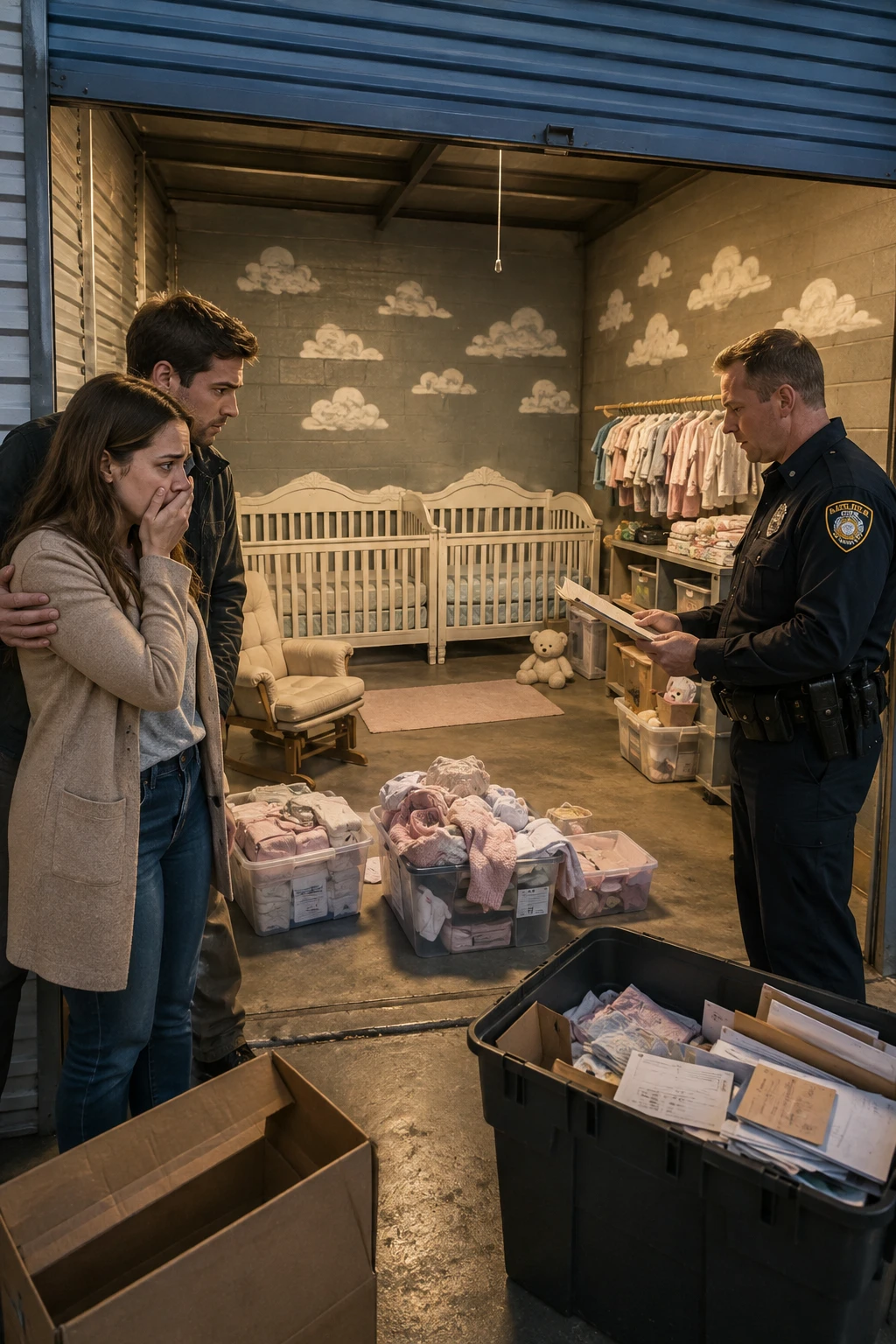
When Travis and I arrived the next morning, Unit 214 was already open.
Detective Moss waited outside.
“Before you go in,” he said, “I need you to understand that nothing inside can be touched.”
I nodded.
Then I stepped through the door.
Someone had painted white clouds across the concrete walls.
Two matching bassinets stood against one side.
A double crib occupied the center.
There was a rocking chair.
Diapers.
Formula.
Bottles.
Blankets.
Newborn clothes arranged by size.
Boxes labeled 0-3 MONTHS, 3-6 MONTHS, WINTER.
A plastic container held dozens of pieces of mail.
My mail.
Insurance letters.
Baby-registry coupons.
Appointment reminders.
Then I saw the wall above the crib.
HARPER.
HAZEL.
My daughters’ names had been painted in large wooden letters.
My knees weakened.
Travis caught my elbow.
Detective Moss approached carrying a folder.
“We found a lease.”
He handed it to me.
The tenant was Lorraine Hensley.
My mother.
I stared at him.
“She rented this?”
“Possibly.”
“Possibly?”
“The identification copy matches your mother’s driver’s license. The signature looks consistent. But payments came from a separate account.”
“Whose?”
He hesitated.
“Blake’s.”
Melissa’s husband.
I looked at Travis.
“That doesn’t make sense.”
“It gets worse,” Moss said.
From another evidence bag, he removed printed copies of my medical appointments.
Photographs showed me entering Riverbend.
Leaving the pharmacy.
Walking from Mercy General to my car.
There was even a photograph of Travis installing the twins’ car seats.
Then Moss showed me a handwritten schedule.
My expected delivery window was circled.
Below it:
Bring the girls home before Kendra changes the plan.
My stomach turned.
“Who wrote that?”
“We’re working on it.”
Moss looked toward another officer.
Then back at me.
“The storage facility has surveillance cameras.”
My heart began pounding.
“We identified three regular visitors.”
“Melissa?”
“Yes.”
“Mom?”
“Yes.”
He lifted a tablet.
“And a third person.”
The grainy video appeared.
A man stepped from a dark SUV.
Tall.
Broad shoulders.
The walk was unmistakable.
I stopped breathing.
It was Travis.
My husband.
The father of my children.
The man who had slept beside me every night while I was documenting the person stalking me.
I backed away from him.
“Kendra—”
“Don’t.”
His face went white.
“Please let me explain.”
“How long?”
He looked at Moss.
That made everything worse.
“How long have you known about this?”
“Six weeks.”
My throat closed.
“Six weeks?”
“I followed your mom.”
“Why?”
“Because I saw her outside our house at two in the morning.”
I stared at him.
“You never told me that.”
“I didn’t want to scare you.”
“You thought finding my mother outside our house at two in the morning wouldn’t be relevant?”
“I followed her here. I saw Melissa. I photographed everything from outside.”
“Then why were you inside?”
Detective Moss stepped forward.
“Because I asked him to go in.”
I looked at him.
Travis had quietly contacted Moss after following Lorraine.
Police didn’t yet have enough for a warrant.
So Travis, who had watched Lorraine enter the unit using a keypad code, later returned and photographed what was visible after finding the door improperly latched.
He’d given those photos to June and Moss.
They had kept me out of it because my blood pressure had already become dangerously unstable.
I was furious.
But Travis hadn’t betrayed me.
He’d been trying, badly and secretly, to protect me.
Then Moss said, “There’s something else.”
Police searched Melissa’s house that afternoon.
They didn’t find baby supplies.
They found three silicone pregnancy bellies.
One beneath her bed.
One in the garage.
One in a suitcase.
Melissa had never been thirty-four weeks pregnant.
In fact, medical records obtained with a warrant showed she had undergone an emergency hysterectomy eighteen months before her baby shower after complications from an ectopic pregnancy.
She physically could not have been pregnant.
The room seemed to tilt when Moss told me.
“So the baby she lost…”
“Didn’t exist.”
“Blake knew?”
Moss nodded.
“He discovered the fake pregnancy about four months in.”
“Why didn’t he tell anyone?”
“According to him, your mother convinced him Melissa was experiencing a severe psychiatric crisis. She told him exposing her would push her toward suicide.”
Blake had stayed.
Then Lorraine proposed something unimaginable.
Kendra was pregnant. Kendra was having twins. Melissa could still become a mother.
At first, Blake thought Lorraine meant adoption someday.
Then he discovered the nursery.
He demanded it be dismantled.
Lorraine threatened to tell everyone he’d helped fake Melissa’s pregnancy.
She also threatened to accuse him of domestic abuse.
So he began sending money to keep track of where it went.
Eventually, he contacted a private investigator.
The investigator was the person who had anonymously tipped off police about Unit 214.
Blake hadn’t disappeared because he was part of the plan.
He’d disappeared because he’d been trying to escape it.
But one question remained.
“How did they get my medical information?”
Moss looked at me for a long moment.
“We know.”
The answer was so simple I almost laughed.
My mother still had my old iPad.
I’d given it to Dad years ago when I upgraded.
After he died, she’d kept it.
Apparently, the device remained connected to my email account.
Every time Riverbend emailed an appointment confirmation, Mom saw it.
Every time I received a portal notification, she saw that too.
And months before the shower, she’d reset my portal password using the email account saved on the tablet.
Riverbend’s system hadn’t shown an outside login because she had been using an authenticated device connected to my identity.
The sonogram printout had come directly from my portal.
Mom had handed it to Melissa.
But even that wasn’t the worst discovery.
Two days before my scheduled C-section, police arrested Lorraine.
Melissa was taken into custody later that morning.
I expected Melissa to deny everything.
Instead, according to Moss, she broke down within twenty minutes.
“Mom said Kendra didn’t want two babies.”
Those were her first words.
Lorraine had spent months telling Melissa that I was overwhelmed.
That I regretted having twins.
That Travis wanted only one child.
That I had privately agreed to let Melissa raise the second baby.
Then, as Melissa’s obsession grew, Lorraine changed the story.
I had supposedly agreed to give her both.
That’s why Melissa screamed, “You stole my babies.”
She believed I’d made a promise and broken it.
It didn’t excuse the knife.
It didn’t excuse the stalking.
But it changed what I thought I knew.
Melissa wasn’t the architect.
She was unstable, grieving the fertility she had lost, and frighteningly easy for our mother to manipulate.
Lorraine had built the entire fantasy around her.
I thought that was the final truth.
It wasn’t.
The final truth came from a box police found at the very back of Unit 214.
Inside were letters.
Dozens of them.
Not recent letters.
Some were twenty years old.
All written by my father.
Most were addressed to Lorraine.
One contained a sentence Moss warned me about before giving it to me.
You cannot keep trying to replace what we lost with the girls. Kendra is not Emily. Melissa is not Emily. They are our daughters, not second chances.
“Who’s Emily?” I asked.
Moss didn’t know.
Aunt Carol did.
When I called her, she went silent.
Then she started crying.
Emily had been my mother’s first daughter.
She died at eleven months old.
Three years before Melissa was born.
Nobody had ever told us.
Lorraine had removed every photograph.
Every baby book.
Every trace.
Except one.
Inside that storage box was a faded photograph of a baby girl sitting beneath a painted wall of white clouds.
The same clouds painted inside Unit 214.
My father had apparently spent decades begging Lorraine to seek treatment.
After Emily died, she became obsessed with recreating milestones.
She dressed Melissa in Emily’s saved clothes.
When I was born, she gave me Emily’s middle name.
Dad eventually threatened to leave if Lorraine didn’t stop.
She hid it better.
But she never stopped.
When Melissa became infertile, something in Lorraine’s carefully controlled world cracked open again.
Then I became pregnant with twins.
And suddenly she had two newborn girls coming into the family.
Two chances.
Two replacements.
Harper and Hazel weren’t intended only for Melissa.
They were intended for my mother.
The night before my C-section, Lorraine called me from jail.
I almost refused the call.
Then I accepted.
For several seconds neither of us spoke.
Finally, she said, “I never wanted to hurt you.”
I laughed once.
It sounded ugly.
“You helped someone stalk me.”
“I helped your sister survive.”
“You stole my medical records.”
“Melissa needed hope.”
“You rented a nursery for my children.”
Silence.
Then she whispered, “They would have been loved.”
My entire body went cold.
“They are loved.”
“That’s not what I meant.”
I gripped the phone.
“What did you mean?”
Her voice softened.
The same voice that had read me bedtime stories.
The same voice that had held me after failed fertility treatments.
The same voice that had promised to keep my twins secret.
“Emily died because I didn’t know enough then,” she said. “I was twenty-two. I trusted doctors. I trusted everyone. I wouldn’t make those mistakes again.”
“They aren’t Emily.”
“I know.”
“No, you don’t.”
“I know they’re not Emily.”
She paused.
Then came the sentence I will remember until the day I die.
“Emily was only one baby. Two would have been better.”
I hung up.
Harper and Hazel were born the next morning at 9:14 and 9:17.
Both healthy.
Both screaming.
Both mine.
When the nurse placed Harper against my chest, I cried so hard I couldn’t speak.
Travis held Hazel beside me.
For months, pregnancy had felt like something being watched.
Tracked.
Claimed.
The moment my daughters arrived, that feeling broke.
Melissa eventually accepted a plea agreement that required long-term psychiatric treatment and barred contact with us.
Blake filed for divorce.
Mom’s case went to trial.
The prosecutor showed photographs of Unit 214.
My stolen mail.
The fake delivery paperwork.
The nursery.
The surveillance records.
Then June introduced the notebooks I’d started after the baby shower.
Page after page.
Date after date.
The same notebook my mother had once mocked me for carrying everywhere.
Pattern is your case.
June had been right.
Lorraine was convicted of stalking, identity-related offenses, conspiracy, theft of medical information, and attempted custodial interference.
But there was one final thing nobody expected.
Six months after the trial, Aunt Carol brought me a sealed envelope she’d found hidden inside one of Dad’s old toolboxes.
It was addressed to me.
Dad had written it shortly before he died.
I sat at our kitchen table while Harper and Hazel slept upstairs and opened it.
Kendra,
If your mother ever becomes too interested in your children, don’t dismiss your instincts because she’s family.
My hands began shaking.
He knew.
He had always known.
Then I reached the final paragraph.
There is something Lorraine never told you about Emily.
I stopped.
Emily did not die from illness.
My heartbeat pounded in my ears.
Your mother fell asleep with her in the bathtub.
The police report from 1976 had called it an accidental drowning.
Lorraine blamed herself.
Dad forgave her.
But after Emily’s death, Lorraine began rewriting the event in her own mind.
First the doctors failed her.
Then the babysitter had distracted her.
Eventually, according to Dad, Lorraine insisted someone had stolen Emily from her, even though she had been the one holding the baby when emergency services arrived.
That sentence explained everything.
Melissa’s pregnancy.
The fake miscarriage.
The nursery.
My mother’s obsession with schedules, hospitals, names and delivery rooms.
For nearly fifty years, Lorraine hadn’t been trying to replace a child she’d lost.
She had been trying to rewrite a story she could not survive remembering correctly.
I thought the letter ended there.
It didn’t.
At the bottom, Dad had added six words.
Ask Carol what Lorraine called you.
I called my aunt immediately.
Carol cried before I finished asking.
“What did Mom call me?”
“Kendra…”
“What did she call me?”
A long silence.
Then Carol whispered:
“Emily.”
My throat tightened.
“What?”
“For almost your entire first year. When nobody else was around, she called you Emily.”
I couldn’t speak.
“Your father threatened to take you and Melissa away. That’s when she finally stopped.”
I looked toward the baby monitor.
Two tiny girls slept safely beneath white blankets.
And suddenly the most frightening part of the entire story became clear.
The nursery in Unit 214 had never truly been built for Harper and Hazel.
Not in Lorraine’s mind.
It was the nursery she had been rebuilding for almost fifty years.
First for Melissa.
Then for me.
Then for my daughters.
A room waiting for the same dead child to come home again and again.
That night, Travis and I removed the wooden name signs from Harper and Hazel’s nursery.
Not because their names frightened me.
Because I wanted nothing in their room that suggested anyone else had a claim on who they would become.
We replaced them with photographs.
Harper laughing.
Hazel asleep against Travis’s chest.
The four of us together.
Messy.
Alive.
Real.
Years later, when my daughters ask why they don’t see Grandma Lorraine, I won’t tell them the whole story yet.
Someday I will.
I’ll tell them that family does not mean ownership.
That grief can explain terrible behavior without excusing it.
That love without boundaries can become something dangerous.
And I’ll tell them about the notebook.
Because there was one lesson I learned before they were even born that I want them to carry forever:
When someone makes you afraid, you do not owe them silence just because you share their blood.
For months, everyone told me I was overreacting.
It was a cake knife.
It was her day.
Melissa was fragile.
Mom was only excited.
Every warning sign arrived wrapped in an explanation.
Every violation came disguised as concern.
If I hadn’t written it down, I might eventually have believed them.
Instead, I trusted the pattern.
I trusted myself.
And when police opened Unit 214, the truth was waiting behind a metal door.
Two cribs.
Painted clouds.
Stolen mail.
My daughters’ names.
And fifty years of a secret my mother had tried to turn into somebody else’s life.
Harper and Hazel will never know that room.
They will never sleep beneath those painted clouds.
They will never be replacements for a dead baby, medicine for someone else’s grief, or characters in a story written before they were born.
They are not Emily.
They are not Melissa’s second chance.
They are not Lorraine’s redemption.
They are Harper and Hazel.
And they are finally, completely, safely their own.