I am Candace Perry, thirty-two years old, a resident physician living in Bozeman, Montana. For four years, I sent my parents $2,000 every single month.
It started as help.
That was the word I used at first, because it made everything feel softer than it really was. Rent was due. A prescription needed to be picked up. Their car needed a repair. My mother’s back pain was getting worse. My father said the utility bill had surprised them again. There was always something, and somehow, every emergency found its way to my phone.

So I paid.
Month after month, I wired money straight from my paycheck into their lives. Twenty-four thousand dollars a year left my account so my parents could live comfortably while I worked night shifts, skipped meals at restaurants, delayed buying things I needed, and told myself this was what daughters did.
Family comes first.
That was the phrase I grew up hearing in our small Montana household. My parents said it so often it became more than a belief. It became a rule. If someone needed you, you showed up. If someone struggled, you helped. If your parents asked, you did not question.
For a long time, I did not question.
I told myself they were trying. I told myself they were embarrassed. I told myself they would thank me when the pressure eased. But the pressure never eased, and the thanks never came.
Their rent was $700, due on the first of every month at a tired apartment complex across town. I paid it without fail. When my mother’s physical therapy sessions cost $500 each, I covered those too, along with the prescriptions she said she could not afford. When their old sedan broke down twice in one year, I paid for the alternator, then the brakes, then another repair my father described in a flat voice, as if I had already agreed before he even called.
I even set up their internet and cable because my mother said the apartment felt lonely. I thought it would make their lives easier. I thought maybe they would notice that I was trying to love them well.
They noticed the money.
They did not notice me.
Most months, the only response I received was a short text from my father.
Money received.
No thank you. No how are you. No are you managing your own bills okay. Just those two words, like a receipt printed from a machine.
My mother was worse in a quieter way. She called when something was needed, never when something was shared. Her voice carried a practiced heaviness, the kind that made me feel guilty before she even got to the point.
“We have another bill coming up,” she would say.
Or, “Your father doesn’t want to worry you, but things are tight.”
Or, “I don’t know what we’re going to do if you can’t help this time.”
I always helped.
I was a resident physician, which sounded impressive to people who did not understand the reality of it. They heard doctor and imagined money. They did not see the long hospital shifts, the aching feet, the cheap meals eaten too late, the exhaustion that followed me home like a shadow.
My parents did not see any of that either.
To them, I was the stable one.
That was the phrase my mother used whenever I tried to push back. Stable meant available. Stable meant responsible. Stable meant my needs were less important because I had learned how to survive without making noise.
My younger sister, Brooke, was different.
Brooke was twenty-eight, a real estate agent in Bozeman’s growing market. She sold expensive homes to people moving in from other states, people looking for mountain views, polished kitchens, and a piece of Montana peace. She dressed beautifully, drove a shiny SUV, and had the easy confidence of someone who had always been applauded for arriving empty-handed.
My parents loved bragging about her.
“Brooke closed another deal,” my mother would say, her eyes bright.
“Brooke is really going places,” my father would add.
When Brooke stopped by their apartment with coffee or pastries, they treated it like an act of devotion. When I sent two thousand dollars, it was treated like a utility payment.
Once, I visited them after a hospital shift and saw Brooke’s SUV parked outside, freshly washed, gleaming even under the gray Montana sky. Inside, she was showing my mother a designer bag she had bought herself as a reward. My parents clapped and laughed as if she had achieved something heroic.
I stood there in my scrubs, carrying a paper bag of groceries I had bought for them, and no one even asked how my day had gone.
That was when the ache started to feel less like sadness and more like recognition.
Still, I kept paying.
I kept paying because guilt is a heavy chain when it has been handed to you young. I kept paying because I knew how quickly my mother could turn disappointed silence into punishment. I kept paying because a part of me still hoped that if I gave enough, they would finally see me.
My husband, Shawn, saw what was happening long before I could admit it.
Back then, we were engaged, living in a modest home on a quiet street in Bozeman. He worked hard, loved simply, and had a way of looking at me that made dishonesty impossible.
He watched me sit at the kitchen table after twelve-hour shifts, laptop open, transferring money I could barely spare.
One night, after my father called about another late bill, Shawn stood in the doorway with his arms crossed.
“Why do you let them treat you like this?” he asked.
His voice was not angry at me. That almost made it worse.
“I’m just helping,” I said.
“Candace,” he said gently, “helping is not the same as being used.”
I looked back at the screen because I could not look at him.
“They’re my parents.”
“I know,” he said. “That’s what makes it painful. It doesn’t make it right.”
I wanted to argue. I wanted to tell him he did not understand. But the truth was, I did not have an answer that made sense outside the small room of fear my parents had built inside me.
My friend Gloria said it more directly.
Gloria was a lawyer in town, sharp-eyed and impossible to fool. We met for coffee sometimes when my schedule allowed, and she had a gift for hearing the sentence under the sentence.
One afternoon, after I told her my mother had asked for an extra thousand dollars for a specialist she would not name, Gloria set down her coffee and leaned forward.
“They are using you, Candace.”
I stiffened.
“She said it was medical.”
“Did she give you a bill?”
“No.”
“An appointment confirmation?”
“No.”
“Did she even ask how you were doing before she asked for the money?”
I opened my mouth and closed it again.
Gloria’s face softened, but her voice stayed firm.
“When was the last time they treated you like their daughter instead of their account?”
I changed the subject. But her question stayed with me.
It followed me through the hospital halls. It sat beside me in the car. It came home with me at night and waited in the dark while Shawn slept beside me.
When was the last time they treated you like their daughter?
I could not remember.
Then came my wedding day.
Shawn and I had planned a small ceremony at a community hall in Bozeman, the kind of place that looked plain from the outside but warm once the lights were on. The hall had wooden beams, soft strings of lights, and a polished floor that reflected candlelight in little golden patches. We did not have a luxury budget, but every detail mattered because we chose it ourselves.
I chose the flowers. I chose the playlist. I handled the caterer, the seating, the invitations, and the little white cards with guests’ names written in careful script. I saved for my dress longer than I admitted to anyone. It was simple, white lace, with pearl buttons down the back. When I tried it on, I felt like the version of myself I had been waiting to meet.
I sent my parents invitations weeks in advance.
Then I called to make sure they had received them.
My father said they had.
“We’ll be there,” he told me.
My mother came on the line after him.
“Of course,” she said.
She sounded distracted, but I held onto the words anyway.
I even offered to cover their gas, though they lived across town.
“No need,” my father said.
I wanted to believe them.
On the morning of the wedding, I woke before my alarm. Outside, the sky over Bozeman was pale and wide, the kind of Montana morning that makes every ordinary thing look briefly holy. I stood by the window for a moment and let myself imagine them arriving.
My mother would adjust my veil. My father would clear his throat and pretend not to be emotional. Maybe, just for one day, they would look at me and see something other than what I could provide.
That hope was small, but it was alive.
The ceremony began without them.
At first, I told myself they were running late. Traffic, maybe. A forgotten jacket. A problem with the car. Something normal. Something forgivable.
I stood at the altar with Shawn’s hands around mine, listening to the officiant speak about commitment and devotion, while part of me kept watching the door.
Every time it opened, my chest lifted.
Every time it was someone else, it sank.
Shawn’s vows made me laugh through tears. Our friends smiled from the rows of folding chairs. The room glowed with warmth and love, and still, there was an empty place inside me where my parents should have been.
After the ceremony, people hugged us. Someone pressed a glass of champagne into my hand. A cousin of Shawn’s told me I looked beautiful. The photographer asked for family photos, and I felt the tiny pause before we adjusted around the absence.
By the time we cut the cake, my stomach was twisted into a knot.
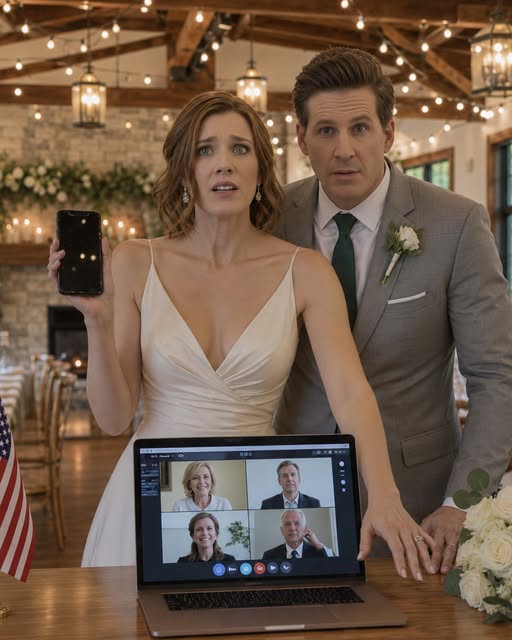
I slipped away from the reception and stepped into the hallway outside the bridal suite. The music faded behind me. My bouquet hung from one hand, the ribbon brushing against my dress. My phone felt slick in my palm.
I called my mother.
She answered on the third ring.
“Mom,” I said, trying to keep my voice steady. “It’s me.”
“Don’t bother us,” she snapped.
The words were so cold, so immediate, that my mind refused them at first.
I stared at the wall in front of me, at a framed print of a Montana mountain scene hanging crooked by the hallway light.
“What?” I whispered.
“I said don’t bother us.”
“Mom,” I said, and my voice cracked despite every effort. “It’s my wedding.”
The line went dead.
No explanation.
No apology.
No hesitation.
I stood there with the phone still against my ear while the world became very quiet around me.
Those three words hurt more than their absence. Not showing up had been cruel. But answering the phone like I was an inconvenience on my wedding day stripped away the last excuse I had been protecting them with.
For a few seconds, I could not move.
Then something inside me changed.
It was not dramatic. It was not loud. It felt like a door closing gently but permanently.
I walked back into the bridal suite, shut the door, and placed my bouquet on the vanity. The white roses tipped against the mirror. My veil had slipped, but I did not fix it.
I opened my laptop.
My hands shook as I typed in the password, but my thoughts were clear in a way they had not been for years.
First, I logged into the account connected to their rent autopay.
Canceled.
Then the utilities that still pulled from my card.
Removed.
Then the grocery credit card my parents used whenever they claimed the month had gotten away from them.
Frozen.
The old checking account I had kept open for their emergencies took longer. I had to verify my identity twice. A code came to my phone. I entered it, waited, and closed the account completely.
It took less than an hour to unravel four years of support.
Four years of overtime.
Four years of guilt.
Four years of being treated like a financial plan instead of a daughter.
Shawn found me in the bridal suite with my laptop open and my wedding bracelet clicking softly against the edge of the desk.
“Candace?”
I looked up.
He saw my face and closed the door behind him.
“What happened?”
I told him exactly what my mother had said.
For a moment, he did not speak. His jaw tightened. His eyes moved from my face to the laptop screen and back again.
Then he crossed the room and pulled me into his arms.
“You don’t have to carry them anymore,” he said.
I did not realize how badly I needed to hear those words until my knees nearly gave out.
Thirty minutes later, my phone started blowing up.
First my father.
Then my mother.
Then my father again.
Call after call lit the screen. The same parents who could not come across town for my wedding suddenly had all the urgency in the world when the money stopped.
I let it ring.
My father left the first voicemail. His voice cracked, but not with love.
“Candace, what did you do? You need to change this back. We can’t have everything cut off like this.”
I listened once.
He never said he was sorry.
He never asked about the ceremony.
He never said congratulations.
He only wanted access restored.
That was the moment the sadness began turning into something harder.
The next morning, a letter arrived at our house.
Not a call. Not a visit. Not an apology.
A handwritten note had been slipped under the door.
My mother’s slanted cursive filled the page in dark ink.
You think you can cut us off? You’ll regret this, Candace. We’ll make sure of it.
I read the words twice.
The first time, my hands went cold.
The second time, my anger woke up fully.
It was not a plea. It was not a mother trying to repair what she had broken. It was a warning, vague but heavy enough to make the room feel smaller.
I showed it to Shawn.
His face hardened.
“This isn’t right,” he said. “We need to do something.”
I knew he was right, but part of me still felt the old hesitation. These were my parents. Taking action against them felt like stepping over a line I had been taught never to cross.
Then I looked at the note again.
They had crossed it first.
I drove to my grandmother’s house that afternoon.
Lillian was seventy, silver-haired, sharp-eyed, and the only person in my family who had ever looked at my parents without being fooled by their performance. She lived in a small house near the edge of town, with flower boxes in the windows and a porch swing that creaked whenever the wind came down from the mountains.
She opened the door and knew something was wrong before I spoke.
“Come in,” she said.
I told her everything.
The money. The wedding. The phone call. The accounts. The note.
By the time I finished, Lillian’s face had gone still in a way I recognized from childhood. It was the look she wore when her kindness stepped aside and something stronger took its place.
“They’ve gone too far,” she said.
She reached for her coat.
“Grandma, what are you doing?”
“What someone should have done years ago.”
She drove to my parents’ apartment with me following behind, my heart racing the whole way.
Their complex sat off a busy road, tired and beige against the gray afternoon. Lillian parked crookedly, got out, and walked straight to their door.
She did not knock gently.
She stood on the walkway and raised her voice loud enough for half the building to hear.
“Nancy, you should be ashamed of yourself.”
Blinds shifted in nearby windows.
My mother opened the door, her face already red.
“Lillian, this is not your business.”
“You missed your daughter’s wedding,” Lillian said, her voice like steel. “Then you threatened her because she stopped paying your bills. That makes it my business.”
My mother started to speak, but Lillian cut her off.
“You took her money. You took her time. You took her heart. And you gave nothing back.”
My father appeared behind my mother, silent, his eyes avoiding mine.
That hurt in a different way. Even then, he could not look at me directly.
Neighbors watched from doorways and windows. My mother’s mouth tightened as the attention grew.
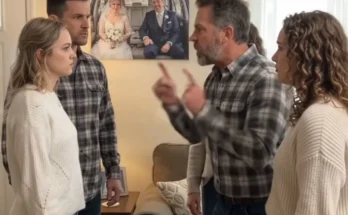
“You don’t know everything,” she snapped.
“I know enough,” Lillian said. “I know she did more for you than either of you deserved.”
Then she turned to me.
“You did the right thing, Candace. Don’t let them drag you back.”
I stood there in the cold outside their apartment and felt something loosen in my chest. For the first time, someone had said out loud what I had been afraid to believe.
I was not cruel.
I was not selfish.
I was done.
A few days later, my bank called.
The teller’s voice was careful, almost hesitant. Someone had tried to access one of my old checking accounts, the one I had used for years to pay my parents’ expenses. They had attempted a $2,000 withdrawal and claimed it was an authorized transfer.
The bank denied it.
My name was on the account, but the identification did not match.
I knew before she finished speaking.
It was my father, or my mother, or both of them acting through the same entitlement they had mistaken for authority.
I thanked the teller, asked for a written report, and hung up with a cold knot in my stomach.
They were not just angry.
They were desperate.
That evening, my phone buzzed with a text from an unknown number.
You can’t hide your secrets forever, Candace. Pay up or everyone will know.
I sat on the couch and stared at the screen until the words blurred.
Secrets.
I did not have the kind of secret they were implying. But the threat felt heavy anyway, like someone had opened a door into a darker hallway.
Shawn sat beside me and read the message.
“This is harassment,” he said, his voice controlled but furious. “They’re trying to scare you.”
“I don’t know what they think they have,” I said.
“That doesn’t matter. We document it.”
He was right.
The next morning, I called Gloria.
She was at our kitchen table before noon, laptop open, hair pulled back, eyes sharp. She read the message, then the note my mother had sent, then the bank report I had requested.
“This is serious,” she said.
The calmness in her voice scared me more than panic would have.
“What do we do?” I asked.
“We start a paper trail. Police report for the attempted withdrawal and the threatening message. We notify the bank. If they continue, we file for protection.”
The word protection made my stomach turn.
Against my parents.
Gloria seemed to understand exactly what I was thinking.
“Candace,” she said, “they are not just asking for money. They are trying to control you.”
I looked down at my hands.
The wedding ring on my finger caught the kitchen light.
“I need to tell you both something,” I said.
Shawn looked at me.
Gloria waited.
I took a breath.
“I have a savings account they don’t know about.”
Shawn’s eyebrows lifted, not in anger, but surprise.
“For years, I’ve been putting money aside whenever I could. It started as two hundred dollars a month. Sometimes more if I picked up extra shifts. It’s about twenty thousand dollars now.”
The words came out quieter than I intended.
I had hidden the account because some part of me knew that if my parents found out, they would treat it like a resource waiting to be claimed.
Shawn reached for my hand.
“You saved that while paying them?”
I nodded.
His expression held pride and sadness at the same time.
Gloria leaned back in her chair.
“Good,” she said. “That is yours, and we are going to make sure they cannot touch it.”
Saying it out loud lifted a weight I had carried in secret. For years, that account had been my safety net, the proof that I still belonged to myself somehow. Now, with my parents threatening me, I wondered whether they had discovered it or whether they were bluffing.

Either way, we moved fast.
Shawn and I changed every password. We added two-factor authentication to every account. We checked my credit report line by line. Gloria drafted letters to the bank requesting full documentation of the attempted withdrawal and started organizing everything into a file.
The note.
The text.
The call log.
The bank report.
The accounts I had closed.
Every step felt like locking a door my parents had kept open for years.
A week later, my phone rang with a number I had not seen in a long time.
It was my uncle Stuart, my father’s younger brother, calling from Missoula.
His voice sounded heavy.
“Candace,” he said, “we need to talk about your grandparents’ estate.”
I froze.
My grandparents had passed years earlier. I loved them deeply, especially my grandmother, whose letters and birthday cards had always made me feel chosen in a way my parents never did. I had assumed there was nothing left to discuss.
“What about it?” I asked.
Stuart exhaled slowly.
“I found some documents in my attic. A copy of the will. There was a trust.”
“A trust?”
“For you and Brooke,” he said. “One hundred thousand dollars, meant to be split evenly.”
I gripped the edge of the counter.
“What?”
“Your father was named executor,” Stuart said. “But he was not the owner. The money was meant for you girls.”
My heart began to pound.
“He never told us.”
“I know,” Stuart said. “And there’s more.”
I closed my eyes.
He told me he had contacted the trust bank to ask about the status. The account still existed, but two years earlier, my father had withdrawn $10,000, claiming it was for family expenses. The bank records showed signatures attached to the withdrawal.
Mine.
Brooke’s.
Neither of us had signed anything.
For a moment, I could not speak.
My father had not just taken my monthly help while hiding money meant for me. He had taken from a fund my grandparents created for my future.
Stuart promised to send everything.
The package arrived the next day.
I sat at my kitchen table with Shawn beside me and opened it carefully, as if the envelope itself might break. Inside were copies of the will, bank statements, and a letter from my grandmother written in her neat cursive.
The letter was addressed to Brooke and me.
She wrote that the money was meant to give us choices. College. A home. A new start if life ever became too heavy. She wrote that she wanted us to feel secure, to know that someone had thought of our future with love.
I read it once.
Then again.
By the third time, my hands were shaking.
My grandparents had tried to protect us.
My father had hidden that protection.
Then he had taken from it.
I called Gloria.
She came over that evening and read every page with a lawyer’s focus and a friend’s fury.
“This is a much bigger problem for them,” she said. “This is not just family pressure anymore. This is documented financial misconduct.”
Shawn sat beside me, his face tight.
“They lied to you for years,” he said. “They let you pay their bills while this existed.”
I stared at the bank statements.
All those nights I had worked overtime. All those times I had eaten cereal for dinner because I had sent them money. All those months I had believed they were on the edge of collapse.
They had let me carry them while standing on money they had hidden from me.
Before I could decide whether to call Brooke, she showed up at my house.
Her SUV pulled into the driveway, clean and bright in the late afternoon light. She stepped out wearing a camel coat and oversized sunglasses, looking polished in the way she always did when she wanted control.
I opened the door but did not move aside right away.
“What are you doing here?” I asked.
She removed her sunglasses.
“We need to talk.”
I let her in, but my guard was up.
She sat on my couch, stiff-backed, barely meeting my eyes.
“You need to start helping Mom and Dad again,” she said.
No greeting.
No congratulations on my marriage.
No question about the wedding.
Just that.
I stared at her.
“They’re in trouble without your money,” she continued. “You can’t just abandon them.”
The old guilt tried to rise, but something stronger met it.
“Brooke,” I said carefully, “they have been lying to us.”
She frowned.
“What are you talking about?”
“There was a trust fund from Grandma and Grandpa. One hundred thousand dollars for us to split. Dad hid it. He withdrew ten thousand dollars using signatures that weren’t ours.”
Her face changed, but only for a second.
“That’s not true.”
I stood, went to the kitchen table, and brought back the documents.
The will.
The bank records.
Grandma’s letter.
Brooke read them in silence. Her hands trembled slightly, though she tried to hide it.
For a moment, I thought the truth had reached her.
Then she looked up, and her expression hardened.
“Even if this is true,” she said, “they still need help.”
I felt the air leave my lungs.
“You’re serious?”
“You’re the one with the stable job,” she said. “Just send them money again.”
There it was.
Stable.
The word my family used when they meant usable.
“No,” I said.
Brooke blinked.
“I’m done. They stole from us. They threatened me. They missed my wedding and treated me like a problem when I called. They do not deserve another dime.”
Her face flushed.
“You’re so selfish.”
The words landed, but they did not sink in the way they once would have.
“I hope one day you understand what they’ve done,” I said.
Brooke stood, grabbed her purse, and walked to the door.
“You’re tearing this family apart.”
I looked at her sadly.
“No. I’m just refusing to hold it together by myself.”
She slammed the door when she left.
The house felt heavy afterward. Shawn came into the room and placed his hand on my shoulder.
I did not cry.
I was too tired of crying for people who called my pain selfish.
Gloria and I decided it was time to make everything official.
She drafted a legal notice stating that I was permanently ending all financial support to my parents. The letter listed the years of payments, the attempted account access, the threatening message, the handwritten note, and the trust documents.
We sent it certified mail to their apartment.
Copies went to the bank and to the police file we had started building.
Signing my name at the bottom felt like drawing a line across my own life.
On one side was the daughter I had been trained to be.
On the other was the woman I was becoming.
A few days later, Lillian called me, and her voice was sharp with anger.
“They were here,” she said.
“Who?”
“Your parents. They came to my house and went through your things.”
I drove there so fast my hands hurt from gripping the steering wheel.
Years earlier, I had stored a few boxes at Lillian’s house. Childhood books. Old clothes. Keepsakes. Journals. Photo albums from summers with my grandparents. Things that had no financial value but carried pieces of me I could not replace.
When I arrived, Lillian’s living room was a mess.
Drawers were pulled open. Papers were scattered across the floor. One of my old boxes sat torn at the corner, its contents spread across the rug.
My journals were gone.
So was a photo album filled with pictures of me and my grandparents.
Lillian stood in the middle of the room, furious.
“I came home from groceries and saw them leaving,” she said. “They didn’t even try to explain.”
I knelt beside the scattered papers.
The violation of it hit me harder than I expected. Those journals were not important to anyone but me. They were teenage thoughts, private fears, old dreams written in colored ink. The photo album held pictures of my grandfather teaching me how to plant tomatoes, my grandmother laughing in a sunhat, Brooke and me sitting on the porch steps before everything felt divided.
My parents had taken even that.
I called Gloria from Lillian’s kitchen.
“This is theft,” she said. “We add it to the report.”
Her voice stayed calm, but I could hear the anger underneath.
“They’re escalating,” she continued. “But that also means they are exposing themselves.”
That evening, Brooke called.
I almost did not answer.
When I did, her voice sounded different. Not polished. Not angry. Scared.
“Mom texted me,” she said.
“What did she say?”
“She told me to make you start paying again or they’d make things hard for both of us.”
My stomach tightened.
“Send it to me.”
A minute later, the screenshot arrived.
Tell Candace to send the money or you’ll both regret it.
The message was short, but it carried my mother’s voice perfectly.
“They’re using you now,” I told Brooke.
“She’s upset,” Brooke whispered.
“She’s threatening you.”
Brooke did not respond.
“Save the message,” I said. “Send it to Gloria. And stay away from them.”
“I don’t know what to do,” she said.
“You don’t have to choose them.”
The line went quiet.
Then she hung up.
The next morning, I returned to Lillian’s house to help clean up the mess.
We moved slowly, sorting through papers and half-empty boxes. The house smelled like lemon cleaner and old wood. Outside, wind pushed against the porch windows.
I was stacking old books when I noticed one with a loose cover. Something small was tucked inside.
A cream-colored envelope.
My name was written across it in my grandmother’s handwriting.
Candace.
I sat down before I opened it.
The letter inside was dated just before my grandparents passed. My grandmother wrote that she and my grandfather had created the trust for Brooke and me because they wanted us to have a foundation. She wrote that my father, Gerald, was only the executor and had no right to use the funds for himself. She wrote that the money belonged to us alone.
Then came the line that broke me.
If anyone ever makes you feel guilty for protecting what is yours, remember that love does not require you to disappear.
I pressed the letter to my chest.
Lillian sat beside me and put her hand over mine.
“She knew,” I whispered.
Lillian’s eyes filled with tears.
“She knew more than she ever said.”
I sent the letter to Gloria.
She called within minutes.
“This confirms intent,” she said. “It supports everything Stuart told us. Candace, this is important.”
Important felt too small a word.
It was proof.
Not just that my parents had hidden money.
Proof that my grandparents had tried to protect me from exactly this kind of pressure.
A few days later, Gloria contacted the bank managing the trust and then brought in a forensic accountant. The news came quickly after that.
The trust still held $90,000.
The missing $10,000 had been withdrawn through paperwork containing forged signatures, not only mine and Brooke’s, but also a version of my grandmother’s signature used in supporting documents.
The bank froze the account pending investigation.
Gloria’s voice was steady when she told me.
“This is strong. Very strong.”
I sat on the edge of our bed with Shawn beside me.
“What happens now?” I asked.
“We keep going,” Gloria said. “And we protect you.”
With her guidance, I filed for a protective order covering me and Shawn. The paperwork listed the attempted withdrawal, the threatening messages, the handwritten note, the missing journals and photos, and the trust documents.
Writing it all down felt unreal.
One by one, the things I had minimized became facts on paper.
Not family drama.
Not misunderstanding.
Facts.
Shawn sat beside me in Gloria’s office as I signed the forms.
“You’re doing the right thing,” he said.
My hands were steadier than I expected.
That night, Brooke called again.
“They texted me,” she said, words rushing. “They said if you don’t drop the legal stuff, they’ll make sure we both pay.”
She forwarded the message.
Tell Candace to back off or you’ll both face consequences.
It came from a new number, but the tone was unmistakable.
“Brooke,” I said, “this is not normal. You need to send this to Gloria.”
“They’re still our parents,” she said, and her voice broke.
I closed my eyes.
“They are hurting us.”
“I don’t want to hurt them.”
“You are not hurting them by telling the truth.”
She hung up without answering.
The next day, Lillian called with another update. My parents had come to her house again, standing on the porch, asking her to help them fix things with me.
She did not open the door.
“I told them to leave,” she said. “Through the window.”
I almost smiled despite everything.
“What did they say?”
“That they were misunderstood. That you were overreacting. That family should not involve lawyers.”
Her voice hardened.
“I told them family should not steal, threaten, or frighten daughters into obedience.”
I sat quietly, listening to the strength in her voice and the pain beneath it. Gerald was her son. She had raised him. Loving me through this meant facing the truth about him too.
“I’m sorry,” I said.
“Don’t be,” she replied. “You didn’t cause this.”
For nights after that, I barely slept.
The protective order was moving forward, the bank investigation was active, and Gloria seemed confident. Still, fear has a way of slipping through locked doors. I imagined my parents showing up at the hospital. I imagined them waiting in the parking lot. I imagined them cornering Shawn when I was not home.
Each time the fear rose, I reminded myself of what was real.
The accounts were secured.
The evidence was documented.
The people who loved me were standing beside me.
I was not alone anymore.
Then, one week after Lillian refused to let my parents into her house, Gloria called with news that made me sit down.
My parents had been detained at a financial services office in Bozeman after trying to open a loan using a fake identification connected to my name.
The office staff flagged the application. Police were called. When officers searched their car, they found copies of threatening letters, forged bank documents, and my missing journals from Lillian’s house.
For a moment, I could not breathe.
Gloria’s voice came through calm, but I could hear the relief in it.
“This is it, Candace. They gave us the evidence themselves.”
I went to the police station with Gloria to give my statement. The building smelled like old coffee and paper. A fluorescent light hummed above us while an officer laid out the timeline.
The attempted account access.
The texts.
The note.
The trust documents.
The missing property.
The loan application.
Every piece connected.
For years, I had felt like I was trying to explain a feeling no one could see. Now, the truth sat on paper in front of people who could not dismiss it as family tension.
The judge granted a permanent protective order the next day.
When Shawn and I walked out of the courthouse, the Montana air felt cold and clean. He squeezed my hand.
“You did it,” he said.
I nodded, though the victory did not feel like celebration.
It felt like setting down a weight I had carried so long that my body did not yet know how to stand without it.
Days later, I learned my parents had been evicted from their apartment.
They had stopped paying rent months earlier, relying on my money to cover what they had not handled themselves. Without access to my accounts and with their legal troubles growing, their landlord moved forward.
I did not feel joy.
That surprised me.
For so long, I thought if the truth ever came out, I would feel satisfied watching consequences arrive. But when they did, what settled over me was quieter than satisfaction.
Peace.
A tired, careful peace.
I did not call them.
I did not send a message.
I did not ask where they were going.
That silence was not cruelty. It was the first boundary I had ever kept without apologizing.
Soon after, Lillian invited me to her house.
The living room was restored now, every drawer closed, every paper sorted. The photo album had been recovered with the journals, though some pages were bent. I sat at her kitchen table while she made tea.
Then she placed a small velvet box in front of me.
“What is this?” I asked.
“Open it.”
Inside was a delicate silver ring etched with tiny flowers.
“This was your great-grandmother’s,” Lillian said. “It belongs with someone who understands what family is supposed to mean.”
My throat tightened.
“I can’t take this.”
“You can,” she said. “And you will.”
I slipped it onto my finger beside my wedding ring. It was cool at first, then slowly warmed against my skin.
It was not expensive in the way Brooke would have measured value. It did not glitter loudly. But it carried something deeper than money.
It carried witness.
It carried history.
It carried the love of women who had endured, protected, and finally placed something back into my hands that no one else could claim.
When the trust was finally released, Brooke and I each received our portion. Mine was $45,000 after the missing amount and legal processes were accounted for.
I sat with the deposit confirmation on my laptop screen and felt the strangest grief.
That money had been waiting all along.
Not as a jackpot. Not as revenge. As protection.
My grandparents had wanted me to have choices, and my parents had hidden those choices while demanding I sacrifice my own.
Shawn and I decided to use part of it to renovate our small Bozeman home.
Nothing extravagant.
We repaired the creaky floors. Painted the walls a warm beige. Replaced the old kitchen light that had flickered for months. Built garden beds in the backyard where I planted flowers like my grandmother once did.
Every nail, every brushstroke, every new hinge felt like reclaiming space.
For years, my money had disappeared into other people’s emergencies. Now, for the first time, it was building something that belonged to us.
Brooke made her choice in the middle of all that.
Her final text was short.
I’m with Mom and Dad. Don’t contact me.
I read it once while standing in the half-painted kitchen. Shawn was sanding a cabinet door outside, and the late afternoon sun fell across the floor in wide golden strips.
The message hurt.
Of course it hurt.
Brooke was my sister. I remembered her as a little girl with scabbed knees and bright hair, chasing me through our grandparents’ yard. I remembered sharing popsicles on the porch steps and whispering after bedtime when we were supposed to be asleep.
But I also remembered her sitting on my couch, looking at proof and still telling me to pay.
Some bonds do not break all at once.
They thin over time, stretched by denial, resentment, and the refusal to see another person’s pain. By the time they finally snap, the sound is quieter than you expect.
I did not reply.
I let her go.
The months that followed were not perfect, but they were mine.
I still had hard days. Sometimes guilt came back in old clothes, wearing my mother’s voice. It told me I had gone too far. It told me family should forgive everything. It told me a good daughter would have found another way.
When that voice came, I looked around my home.
At the garden beginning to grow.
At Shawn making coffee in the kitchen on quiet mornings.
At Lillian’s ring on my finger.
At the framed copy of my grandmother’s letter tucked safely in my desk.
Love does not require you to disappear.
I began to understand that boundaries are not walls built out of bitterness. Sometimes they are doors with locks, placed where people kept walking in and taking what they had no right to touch.
For most of my life, I thought being loyal meant staying available no matter how I was treated. I thought sacrifice proved love. I thought if I endured enough, gave enough, and asked for little enough, my parents would one day turn toward me with gratitude.
They never did.
But other people did.
Shawn did when he stood beside me in the bridal suite and told me I did not have to carry them anymore.
Gloria did when she turned my fear into a file, then into action.
Lillian did when she stood outside my parents’ apartment and said what I had been too ashamed to say.
My grandparents did, even after they were gone, through a letter hidden inside an old book, waiting for the day I needed proof that someone had wanted me protected.
I still think about that wedding day sometimes.
Not the absence first.
Not even the phone call.
I think about the moment after.
The quiet bridal suite. The crushed bouquet. The laptop glow on the white lace of my dress. My hands trembling as I closed one account after another.
At the time, it felt like everything was falling apart.
Now I know it was the first time my life had ever truly begun to come back together.
My parents received $2,000 a month from me so they could live comfortably. On my wedding day, they did not show up. When I called, my mother told me not to bother them.
So I stopped bothering them.
I stopped paying.
I stopped explaining.
I stopped apologizing for protecting myself.
And thirty minutes after I closed every account in my name, my father finally called like I mattered.
By then, he was too late.