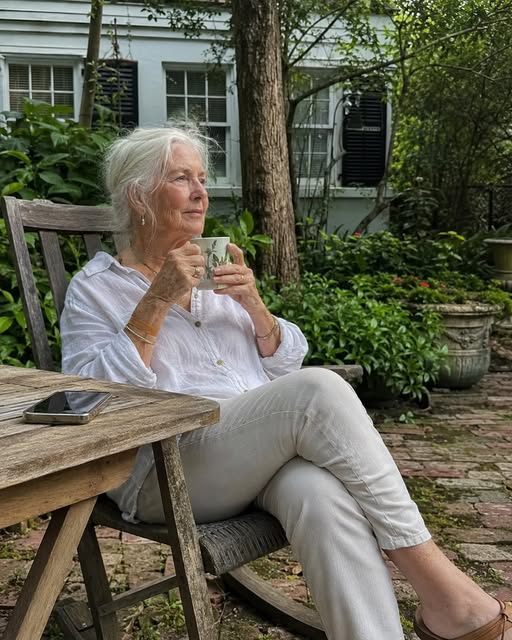
I didn’t ask why I’d been uninvited. I didn’t beg for a spot on that trip. I just sat there and listened as my daughter-in-law told me her mother didn’t want me coming along. Then I opened my banking app and cut off every single dollar they thought was going to keep flowing.
A week later, they’d called me 50 times.
“My mom doesn’t really want you there, Helen. It’s just better this way.”

That sentence sliced through the silence of my cozy kitchen in Charleston like a serrated knife. I was sitting by the window, looking out at my hydrangeas, while my daughter-in-law Brooke spoke on the other end of the line. Her voice was cool, almost clinical, as if she were giving me a weather report rather than talking about the family vacation to the Colorado Rockies.
“Her mother,” I repeated calmly.
I didn’t feel a tremor in my voice, just a deep, crystalline realization.
“We’re talking about the trip I put $6,000 toward so you guys could afford that luxury resort.”
There was a brief pause. I heard the faint clink of a glass on her end.
“Don’t take it the wrong way,” Brooke continued. “She just feels like you’d be a bit of a buzzkill. You’re so traditional. We just want it to be our inner circle.”
I looked at my hands. They were steady.
Since my husband passed away five years ago, I had supported my son Julian and his wife however I could. Monthly transfers, the rent for their townhouse, even Brooke’s car payments. I was the bank, but apparently, I wasn’t a guest at the table.
“I understand,” I said shortly. “Enjoy your time.”
I hung up without waiting for an answer. My mind was already racing. I wasn’t a woman who cried or screamed. I was a woman who took care of business.
I opened my banking app on my tablet. There they were, the recurring transfers: rent, utilities, the grandkid fund, even though they didn’t have kids yet.
Thousands of dollars flowed from my account to theirs every single month.
My finger hovered over the delete button. A moment of hesitation.
If I was a buzzkill, then my financial absence should provide all the cheer they needed.
With a few precise clicks, I ended years of support. I didn’t feel rage, just a strange, cold sense of relief.
When I turned off the tablet, the house was as quiet as before, but something fundamental had shifted.
I knew this was only the beginning.
The next morning started like any other. I brewed a strong cup of coffee and enjoyed the stillness. Normally, I might have called Julian to ask if they’d arrived safely.
Not today.
I looked at the guest room downstairs. It was stuffed with Brooke’s old designer bags and Julian’s sports gear that they were storing because their place was too small.
I grabbed some heavy-duty boxes from the garage. Without rushing, but with total focus, I started packing their things. I wasn’t angry. I was just decluttering.
If I wasn’t part of the vacation plans, why should my home be a free storage unit for people who found my presence stifling?
I labeled every box clearly: Brooke, clothes; Julian, hobby.
In the afternoon, I drove downtown. I bought a ticket for a solo cultural tour of Savannah, a trip I’d wanted to take for a long time, but never had the chance because I always had to be available for the two of them.
Standing at the counter, I felt a new lightness.
I was 65, healthy, and financially independent. Why had I spent so long feeling like a beggar in my own family?
That evening, I checked my phone.
No messages.
They were probably already in the mountains ordering expensive wine and laughing about the traditional mother sitting quietly at home.
They had no idea the faucet had run dry.
Banks don’t process everything over the weekend, but the cancellations were already in the system. I sat on the patio with a book. The garden needed some work, and I decided right then to hire a professional landscaper.
The money I was no longer sending to Denver would do a lot of good right here.
It was a beautiful evening, almost peaceful, if not for the looming shadow of what was coming.
Tomorrow was Monday, the first business day of the month. The day their rent was due.
I put my phone in a drawer and went to sleep.
At exactly 9:00 Monday morning, I was eating breakfast when my phone started vibrating in the drawer.
I left it there.
I knew exactly what had happened. The transfers had failed.
In Julian and Brooke’s world, that was a catastrophe because they lived month to month, always right at the limit of my generosity.
After the third call in 10 minutes, I pulled the device out.
Ten missed calls from Julian, three from Brooke.
Then, the first text.
Mom, is there a problem with the bank? The rent payment bounced.
I sipped my tea.
It wasn’t a bank problem. It was an account holder decision.
I didn’t reply. Instead, I called a local locksmith. It was time to change the locks. Not because I was afraid, but because Julian still had a key and I wanted total control over my private space.
“Can you be here this morning?” I asked. “Perfect.”
While the locksmith worked, more messages flooded in. The tone shifted quickly from concern to accusation.
“We’re sitting here at the hotel and Brooke’s credit card was declined because the backup account is empty. What is going on?” Julian wrote.
It was fascinating to see how fast the mask of concern slipped when the money stopped.
I paid the locksmith in cash and held the new shiny keys in my hand. A small step, but a major symbol.
My house was fully mine again.
I finished packing the last of their boxes and stacked them neatly in the garage.
In the afternoon, Julian called again. This time, I picked up. His voice sounded frantic. I could hear the mountain wind whistling in the background.
“Mom.”
“Finally.”
“Didn’t you see the messages? We have a massive financial crisis over here.”
“Hi, Julian,” I said calmly. “I don’t have any financial crisis. My accounts are perfectly balanced.”
There was a long silence on the other end. I could practically hear him trying to process what I just said.
“What is that supposed to mean, Helen?” Brooke’s voice suddenly barked in the background.
She was obviously listening in.
“We were counting on that money. That’s our budget for the month.”
I leaned back in my armchair. I didn’t like her tone, but it didn’t surprise me.
“You plan a budget with your own money, Brooke,” I replied matter-of-factly. “Not with the wealth of a woman who dampens the mood.”
Since I wasn’t invited on the trip, I saw no reason to keep financing it.
“And as for your rent, you both have jobs. It’s time you covered your own overhead.”
Julian sounded desperate now.
“But Mom, we already booked the expensive rental car and the hotel. We can’t just leave. Why didn’t you warn us?”
I almost smiled.
Warn them? Had they warned me when they cut me out of the family vacation?
“I simply adapted to your need for flexibility,” I said. “You wanted to be inner circle. Money is a very personal connection. Since you severed the social connection, I completed the financial one. It’s only logical.”
Julian tried a different tactic.
“This is blackmail. You’re punishing us just because we wanted some time to ourselves.”
“No, Julian,” I corrected him. “Punishment would be taking away something that belongs to you. I simply stopped giving you gifts. There’s a big difference. And while we’re on the subject, your things are packed in the garage. I’m turning that spare room into a painting studio next week.”
Brooke practically screamed something about ungratefulness and how impossible I was.
I waited until she was done.
Then I said, “I’m going to hang up now. I have an appointment with my landscaper. When you get back, you can pick up your boxes. Please call first. I have new locks.”
I hung up and turned the phone off completely.
My living room was blissfully quiet again.
I didn’t feel like a victim, and I didn’t feel like I was out for revenge. I felt like a woman who was finally back in the director’s chair of her own life.
The next day, I drove to my favorite cafe in the historic district. I wanted to be around people, just not my people.
As I enjoyed my lemon tart, I thought about Julian’s reaction. He was my son, but he had become a shadow of his wife. He’d forgotten that respect isn’t a one-way street.
I turned my phone on briefly to confirm my Savannah trip. Immediately, notifications exploded.
Fifty missed calls total since Friday.
There was a message from my sister-in-law.
Helen. What’s going on? Brooke is posting on Facebook that you abandoned them on vacation. Everyone is asking.
I sighed. The public smear campaign had begun.
I opened the app and saw Brooke’s post, a picture of the mountains captioned with a sob story about family instability and how sad it is when you can’t rely on the older generation.
The comments were a mix of prayers and “so sorry you’re going through this.”
Normally, I would have been mortified, but today was different.
I typed a short, factual comment.
“Dear Brooke, I’m so glad you’re enjoying the trip. I didn’t realize you defined reliability as my $6,000 monthly allowance. I thought family meant mutual respect, not just a recurring wire transfer. Have fun in the Rockies.”
Within minutes, the comment section exploded.
The people who were offering sympathy suddenly started doing the math.
“Six thousand dollars a month,” someone wrote. “That’s more than most families make.”
The tide turned instantly.
The internet does not like spoiled adults complaining about their generous benefactors.
I deleted the app from my phone. I didn’t need digital validation, but it felt good to let the truth sit in the room.
The truth is often the simplest defense.
That afternoon, I started setting up my studio. I bought canvases and high-end paints. It was a beautiful room, bright and airy.
As I looked at the empty shelves where Brooke’s expensive bags used to sit, I felt a deep sense of satisfaction.
My house could breathe again.
And I breathed with it.
Two days later, the doorbell rang. Through the intercom, I heard the voice of Greg, Brooke’s brother.
He was actually a decent guy, a hard worker. I opened the door, but kept him in the foyer.
“Helen,” he said, looking visibly uncomfortable. “I was asked to check in. The mood on the trip has, well, it’s tanked.”
“I’m not surprised, Greg,” I replied. “Champagne probably doesn’t taste as sweet when it’s not on my tab.”
Greg looked down at his shoes.
“They had to switch hotels, some cheap motel on the outskirts. Brooke is losing it. Julian is trying to keep the peace, but he’s a wreck. He’s asking if you could at least cover the rent this one last time, as a loan.”
I shook my head.
“Greg, you’re a good man, but don’t let them use you as a messenger boy. Julian has my number. If he wants a loan, he can sign a legal contract and provide collateral. But as a mother, I’m currently on retirement.”
Greg sighed.
“I get it. Brooke crossed a line with that stuff about her mother. It was disrespectful.”
“It was illuminating, Greg,” I corrected him. “It showed me exactly where I stood. And now, I’m standing here in my house planning my own vacation. Would you like a coffee before you go?”
We had coffee in the kitchen. We didn’t talk about money anymore.
He told me about his construction business, and I realized how much I’d missed normal conversations, ones that didn’t revolve around Julian’s latest career pivot or Brooke’s shopping sprees.
When he left, he shook my hand.
“I think this is the best thing you could have done, Helen. They need to grow up.”
After he left, I felt validated. It wasn’t just me. Even outsiders saw the madness.
I packed my suitcase for Savannah. My train left tomorrow morning.
A new chapter was starting, and for the first time in years, I didn’t feel responsible for someone else’s happiness, only my own.
I spent five wonderful days in Savannah. I toured the historic homes, walked through the moss-draped squares, and ate in little bistros without checking my phone once.
When I got back to Charleston on Friday evening, a familiar car was parked in front of my driveway.
Julian and Brooke.
They did not look like they had just come from a relaxing getaway.
They were sitting on the front porch steps, surrounded by a few bags.
When I got out of the Uber, Julian jumped up.
“Mom, where have you been? We’ve been waiting for hours.”
“I was on vacation, Julian,” I said calmly, handing the driver a tip. “I told you I’m starting to look out for myself.”
Brooke looked terrible. Her hair was a mess, and that arrogant smirk had been replaced by pure stress.
“Helen, we need to talk. This lock thing. It’s too much. We couldn’t even get our stuff.”
“Your things are safe in the garage,” I replied, walking toward the door. “I’ll unlock it for you in a second, but you’re not coming inside tonight. I’m tired from traveling.”
“Mom, please,” Julian pleaded. “The landlord sent us an eviction warning. If we don’t pay the rent by Monday, we’re out. We’re broke. Everything went to the cancellation fees at the hotel.”
I stopped at the door and looked at my son. He looked so small.
“Julian, you’re 35 years old. You have a job at a marketing firm. Where is your paycheck?”
“It wasn’t enough for the lifestyle, Brooke. I mean, the lifestyle we wanted,” he stammered.
I opened the front door, stepped inside, and turned back one last time.
“Then, you need to change your lifestyle. That’s called reality. I’m going to open the garage door now. Take your boxes. For anything else, we can talk next week, but only if you have a plan for how you’re going to fund your own lives.”
I hit the button for the garage and closed my front door.
I heard the whir of the motor and then Brooke’s muffled, angry hissing outside.
I didn’t care.
I made a cup of tea and enjoyed the feeling of being home.
On Monday, Julian called. This time, he sounded different. The panic had been replaced by a dull sort of acceptance.
“Mom, can we meet? Just us at a coffee shop.”
I agreed. I wanted to see if my son still existed under the layers of entitlement.
We met at a small bakery. Julian had a folder with him.
“I ran the numbers,” he started quietly. “Without your help, we can’t afford the townhouse. We gave notice. We’re moving into a smaller apartment on the edge of town.”
I nodded.
“That’s a sensible first step, Julian.”
“Brooke is furious,” he continued. “She says you betrayed us, but I did a lot of thinking in that crappy motel in Colorado. We treated you like an ATM. I’m sorry, Mom. Truly.”
I looked at him for a long time. I wanted to believe him, but I wasn’t naive.
“Apologies are just words, Julian. Actions are what count. I’m not paying the rent this month. You’ll have to take out a personal loan or sell the car. You need to feel what it means to have obligations.”
He swallowed hard.
“I know. I already turned in my leased car. I’m taking the bus to work now.”
That was new. That was a real consequence.
“And Brooke?” I asked.
“She’s looking for a full-time job. She was only working a few hours a week because she thought that was enough.”
Julian looked like he’d aged five years in a week, but his gaze was steadier than usual.
“Good,” I said. “Once you have your debts under control and you’ve proven for a year that you can stand on your own two feet, we can talk about having a normal relationship. But the money from me is over. I’m using my savings for my travels and my home. And for charities I actually care about.”
Julian nodded slowly. It was a painful process for him, but a necessary one.
We parted with a quick hug.
For the first time in a long time, the connection to my son felt real, not bought and paid for.
The next few months flew by. I transformed my house into a place of creativity. My painting studio became my favorite sanctuary.
I found new friends in an art class, people my age who had similar stories of letting go of their adult children. We laughed a lot about the madness of getting older.
I heard from Julian regularly, but less frequently.
He stopped sending me lists of bills and started sending me photos of his new modest apartment. He seemed prouder of those 600 square feet than he ever was of the flashy townhouse.
He told me he’d learned to cook because DoorDash had become too expensive.
Brooke kept her distance. That was perfectly fine with me.
She couldn’t get over the fact that the old lady had fought back. It was a necessary distance. Without her constant influence, Julian started acting more like the boy I’d raised, grounded and honest.
One day, I got a letter from Brooke’s mother. She apologized in winding, flowery sentences for the misunderstanding before the trip.
She claimed she hadn’t known how much I was supporting them.
I didn’t write back.
Some apologies only come when the well runs dry and people worry about their own reputation.
I realized I wasn’t waiting for the phone to ring anymore. My phone used to be my anchor. Now, it was just a tool.
I had learned to love the silence.
When you stop tying your expectations to others, you rarely get disappointed.
On a golden October afternoon, I sat in the garden, looking at the roses my new landscaper had trimmed so perfectly.
I felt rich, not because of the balance in my bank account, but because of the freedom in my head.
I’d had the courage to say no, and the world hadn’t ended.
In fact, it had become much clearer.
It was Christmas. The first Christmas we celebrated under the new rules.
Julian and Brooke came to visit, but not to stay. We had agreed they would come over for two hours for coffee. They brought a cake baked by Julian himself.
The atmosphere was polite, almost a little formal, but there was no poison in the air.
Brooke had become quieter. She wasn’t wearing new jewelry. She just had on a simple blouse. She seemed to have understood that her games held no power here.
We talked about the weather, Julian’s job, and my plans for a trip to Italy in the spring.
“You seem so different, Mom,” Julian said as he followed me into the kitchen to help with the dishes.
“I’m just being myself, Julian,” I replied, smiling at him, “without the burden of having to buy someone’s time.”
Julian lowered his head.
“I’m sorry it had to get to that point. But you were right. We were being parasites.”
“That’s in the past,” I said firmly. “What matters is that you’re responsible for your own life now. That’s the greatest gift I could give you, even if it felt like a punishment at the time.”
When they left, I waved to them from the porch.
I closed the door, turned off the Christmas lights, and sat down in front of my fireplace. The house was warm, smelling of cinnamon and pine needles.
I looked at my phone sitting on the table.
No 50 missed calls. No desperate texts.
Just one message from my new friend from the art class wishing me a Merry Christmas.
I leaned back and closed my eyes.
I had lost my family as I knew it, but I had found a new kind of relationship, one based on reality, not dependency. And most importantly, I had found myself again.
Money can buy a lot of things. Mountain vacations, expensive rent, and the illusion of closeness.
But peace, real deep peace, only comes when you’re willing to pay the price of the truth.
I had paid it, and it was worth every cent.
Outside, it began to snow lightly, and inside my home, there was the most beautiful silence in the world.