Part 1: The Envelope He Left Behind
At seventy-eight, I thought marrying Walter Bennett had saved us both from loneliness. A week after his funeral, his attorney handed me an envelope that threatened everything I believed about our life together.
Before Walter, I lived in the state-funded wing of our nursing home, sharing a cramped room and stretching a small pension. Walter, eighty-two, occupied the penthouse, with a private chef and nurses available around the clock.
We met over chess in the courtyard. Beneath an old oak tree, we shared imported tea, listened to jazz, and spoke about the things we wished we could change.
Money had given Walter comfort, but little companionship. His wife had died, and his three children rarely visited.
“They aren’t interested in me,” he admitted one afternoon. “They’re waiting for what I’ll leave behind.”
When his health deteriorated, they suddenly appeared with lawyers. They wanted control over his medical decisions, and Walter feared they would shorten his remaining time.
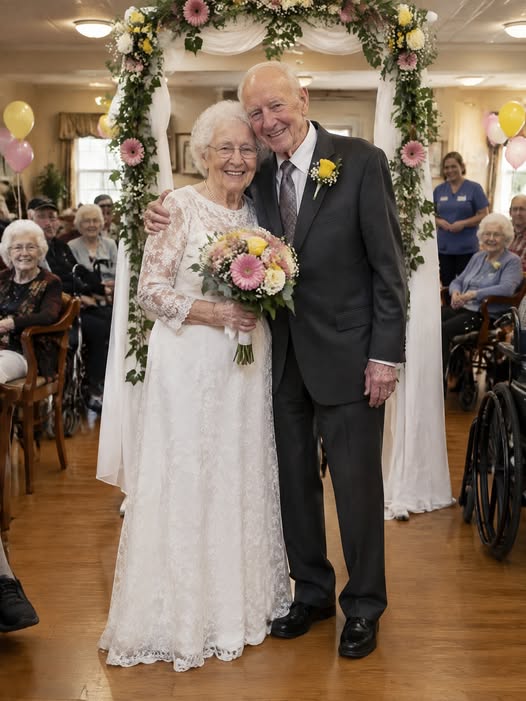
He asked me to marry him so they could not dictate his final days. I agreed because I wanted him protected.
He brought me upstairs to the penthouse, and we spent two happy years together. During his final months, we read aloud to each other and watched the sunset from his balcony.
When he died, I was holding his hand. At the funeral, his children barely spoke to me, exchanging whispers and hostile looks instead.
A week later, his attorney, Mr. Grant, sat across from me in the suite. Between us lay a cream envelope sealed with red wax.
“Is this about the estate?” I asked. “His children can have the money, the furniture, everything. I never married him for that.”
Mr. Grant looked troubled. “Margaret, all three have filed lawsuits challenging your marriage. They claim their father was incompetent and that you manipulated him.”
“He beat me at chess three nights before he died.”
“I have the evaluations proving he was lucid,” he replied, sliding the envelope toward me. “But this contains something else—a confession and instructions. Please sit down before you read it.”

Part 2: The Photograph in the Envelope
Inside were a handwritten letter and a faded photograph taken forty-five years earlier. It showed a young Walter outside a municipal building in Chicago, standing with a dark-haired woman and a little girl in a yellow raincoat.
The woman was not Diana, his late wife. The child held a tiny red doll identical to one from my childhood—the doll I had buried beneath a willow tree when I was seven, after my mother disappeared.
“This must be a mistake,” I whispered.
“Read his letter,” Mr. Grant said. “His children intend to arrive with a court injunction at five.”
Walter’s familiar handwriting blurred through my tears.
My dearest Margaret,
I told you the truth about earning my fortune in commercial shipping. I never told you what I sacrificed to begin.
Your mother was Rose. You were three when I left.
I stopped reading. My grandmother had told me my father died in an industrial accident. I had grown up in state care, worked thirty years as an assistant librarian, and eventually survived on a tiny pension while he lived six floors above me.
The letter continued.
Diana’s father offered me a place in his shipping business, provided I severed every connection to my past. I chose wealth and abandoned you and your mother.
I left a modest trust fund. Your grandmother’s attorney stole it six months later, something I discovered decades too late.
During forty years with Diana, we raised Adrian, Celia, and Thomas. I gave them everything money could provide, but never taught them to value anything else.
After Diana died and my health failed, I traced your pension records and learned where you lived. I chose this nursing home because you were here.
My hands shook. Even our first meeting had been arranged.
I was afraid you would turn away if I admitted who I was. So I waited beneath the oak tree with a chessboard and the tea you liked. I wanted to know my daughter.
Asking you to marry me was also my attempt to protect what I intended to leave you. I believed the legal protection of a spouse would prevent my other children from taking it.
The shipping interests, properties, and private funds total seventy-four million dollars. That fortune began with the life I abandoned. I wanted it returned to you.
Forgive me.
Your father, Walter.
The man I had mourned as my husband had knowingly concealed that he was my father. Our companionship had been real to me, but he had denied me the truth I needed to choose it.
“He knew the entire time?”
Mr. Grant nodded. Private investigators had spent six months confirming my identity. Walter had watched from a balcony before finding the courage to approach me.
I felt grief and anger together. He had wanted forgiveness, but he had arranged everything so I could not confront him while he was alive.

Part 3: The People Who Came to Evict Me
The suite doors burst open before I could answer. Adrian, Walter’s fifty-year-old eldest son, entered with Celia and two attorneys.
Celia glanced around with disgust. “Still enjoying the penthouse? You haven’t wasted any time.”
Adrian stopped in front of me. “We’ve filed an emergency motion with Judge Kessler. We’re challenging the marriage and demanding a psychiatric review. You have thirty minutes to leave. Anything our father bought stays here.”
For two years, I had watched him visit once every three months, stay eight minutes, and ask about tax shelters. Celia complained about the antiseptic smell while Walter struggled to sit upright.
I folded the letter and stood.
“You could show your father some respect.”
Adrian laughed. “He was a confused old man, and you took advantage of him. A few chess games don’t entitle you to our inheritance.”
Mr. Grant opened his briefcase. “Your attorneys should examine the filing I submitted at eight this morning.”
“We already have an injunction against the primary trust,” Celia said.
“That trust was dissolved eighteen months ago. Three independent neurologists documented your father’s mental competence when he approved the changes.”
He placed a stamped binder before the attorneys and explained that Walter had transferred seventy percent of his liquid holdings, his shipping shares, and his entire property portfolio into an irrevocable living trust.
I was its sole beneficiary.
“These assets do not pass through his will,” Mr. Grant said. “Your inheritance challenge does not give you control over them.”
One attorney hurried through the documents, then leaned toward Adrian and whispered. Adrian’s face reddened.
“You stole what belonged to us!”
“I took nothing from you,” I answered. “Your father made these arrangements himself.”
I raised the photograph so he and Celia could see it.
“And there is something he never told you. Before he was your father, he was mine.”
Celia stared at the little girl in the yellow raincoat.
“That’s impossible. Our mother was his only family.”
“He abandoned my mother and me to marry into yours. I learned the truth today.”
Adrian’s attorney pulled him aside and urged him to leave. He warned that they needed to examine the new evidence before making further accusations or risking counterclaims.
I pointed toward the doors.
“Get out. All of you.”
Adrian looked at me closely, finally noticing the resemblance he had never considered. Then he turned away, with Celia and their attorneys following.
When the doors closed, Mr. Grant cautioned that they might keep challenging the arrangements. Nevertheless, he believed the documents protected the assets Walter had transferred to me.
I was suddenly wealthy. I was also grieving a father I had never known existed.

Part 4: What I Chose to Keep
From the window, I could see our table beneath the oak tree. The chessboard still sat where we had spent so many afternoons together.
I thought about the residents downstairs, eating poor meals and sleeping in crowded rooms. Until Walter brought me upstairs, I had lived among them, knowing how easily the world forgot people who had little money and nowhere else to go.
His fortune could not restore my childhood or excuse his deception. But I could decide what happened to it now.
“Mr. Grant, establish a foundation tomorrow,” I said. “Call it the Walter and Rose Bennett Endowment.”
He reached for his notes.
“Put fifty million dollars into a permanent trust to fund residential care, medical treatment, and private care for residents in this city’s state-funded nursing-home wings.”
He looked up. “Fifty million? Margaret, you could live anywhere. Travel. Buy a home in Europe.”
“I’m seventy-eight. I don’t need another mansion. I need to know that another woman won’t spend her old age in a cold room believing nobody remembers her.”
“And the remaining money?”
I touched the letter in my pocket.
“Keep this suite available to residents who need somewhere to watch the sunset.”
After he left, I settled into Walter’s balcony chair and pulled his wool blanket over my knees. The autumn air smelled of fallen leaves and approaching rain.
I read his letter again. He had been selfish and cowardly, and his final attempt to repair the past had wounded me in ways he had refused to face.
Yet for two years, he had also listened to me. He had shared quiet afternoons, books, music, and the friendship that made this place feel less lonely.
Forgiveness would not make his choices right. Still, I found I could remember those afternoons without surrendering what I now knew.
As the sky turned gold and violet, I folded the letter.
“I forgive you, Walter,” I whispered. “Rest now. The game is over.”