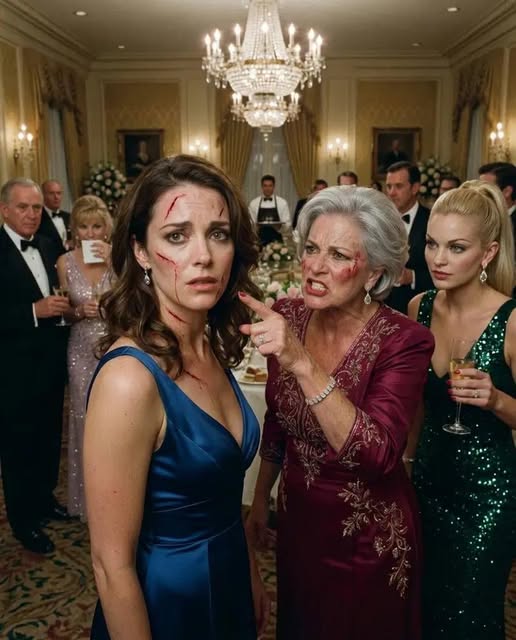
My parents had secretly spent five months organizing an $85,200 gala at the most exclusive country club in Connecticut to celebrate my sister, Paige, completing a six-month marketing certificate at a community college. Eighty-five thousand dollars. When I got accepted into Yale, my father handed me a $500 check for “books” and told me I needed to figure out the remaining $68,000 tuition bill myself. So I did. I worked three jobs, buried myself in debt, and survived on caffeine and stubborn determination. Meanwhile, my sister—who received a $52,000 BMW for her eighteenth birthday simply because she existed—was getting a full red-carpet celebration.
But the spreadsheet itself was not the cruelest part.
The cruelest part was the seating chart.
My name appeared beneath a category labeled “General Guests (Do Not Introduce).”
They had not even formally invited me. Their plan was to trick me into attending as an unnoticed spectator so I could watch Paige’s grand surprise unfold.
Six days later, the trap finally closed around me. I stood in the glittering ballroom, completely invisible, while my father raised his champagne glass for the fourth time and shouted into the microphone about Paige being the “ultimate pride of the Adams family.”
He never mentioned my name.
Not once.
Across the ballroom, Paige caught my eye. She did not look guilty. Instead, she slowly lifted her champagne flute and smiled at me with a triumphant, mocking grin.
She should not have done that.
That smile changed everything.
Paige believed her smirk marked the final victory in our parents’ lifelong game of favoritism. She had no idea she had just handed me the match that would burn their polished world straight to the ground.
Part 2
The morning of my actual Yale graduation, the silence inside my tiny apartment felt deafening. There were no balloons, no catering deliveries, no proud family phone calls. At exactly 9:00 AM, my mother swept through my front door, her heels clicking sharply across the hardwood floor. She did not sit down. She did not even glance at the cap and gown hanging beside my closet.
Instead, she dropped a cheap Hallmark card onto my kitchen counter—the kind you buy last minute at Target for $4.99. Inside was a $50 gift card.
“We won’t be able to make it to the ceremony, sweetie,” she said while checking her gold Cartier watch. She had been inside my apartment for exactly twenty-three minutes. “Your father has a golf tournament, and Paige booked a spa day to recover from her big party. Besides, we figured you wouldn’t want all the fuss. You’ve always been so… independent.”
Independent.
Her favorite polite replacement word for unwanted.
As the door shut behind her, I didn’t cry. Tears serve no structural purpose. Instead, I placed that $4.99 card carefully on my desk and started building.
Architects do not destroy things through messy emotional breakdowns. We build structures that last longer than the people who doubted us.
My first call was to my advisor at Yale, a giant in the architecture world who understood the real significance of my thesis project. My second call went to my grandmother, Harriet Adams. At eighty-two years old, Harriet remained the true matriarch of our family—old money, razor-sharp intelligence, and a woman who had silently watched my parents’ toxic favoritism grow more disgusting for over thirty years.
When I showed Harriet the spreadsheet from the iPad and told her about the Target card, her aristocratic expression hardened into stone.
“Your mother is a real estate agent who married into my family’s name, Catherine,” Grandma Harriet said coldly. “And your father has forgotten whose blood runs through his veins. How much do you need to show people who you really are?”
“I don’t want a party, Grandma,” I answered quietly. “I want an exhibition.”
Two days later, a cashier’s check for $180,000 appeared in my account. With Harriet’s backing and my advisor’s enormous influence, I didn’t simply rent a hall—I secured gallery space at the Museum of Modern Art (MoMA) in New York City for a private unveiling of my graduate pavilion project, Quiet House.
The guest list itself became a masterpiece of strategy. I invited three hundred of the most influential figures in East Coast architecture, Yale faculty members, and respected art critics. But the most important detail was inviting exactly six women: the absolute center of my mother’s elite social circle, the wealthy Connecticut women whose approval she had spent her entire life desperately chasing.
I specifically did not invite my parents or Paige.
The night of the exhibition blurred into expensive catering, brilliant lighting, and elegant conversations. Quiet House—a minimalist architectural structure representing resilience through isolation—became the undeniable centerpiece of the evening. My mother’s closest friends stood inside the MoMA gallery staring in shock as they realized the daughter my mother constantly dismissed as “anti-social” was being celebrated as a prodigy by New York’s elite.
Then Grandma Harriet stepped toward the microphone.
The entire room fell silent.
“I am here tonight to celebrate true brilliance,” Harriet announced, her voice echoing through the museum walls. “And to publicly remind everyone that excellence cannot be purchased with shallow praise or seventy-thousand-dollar cars. I am extraordinarily proud of my granddaughter, Catherine. And because true legacy belongs only to those who earn it, I have a public announcement regarding the Adams family estate.”
I watched my mother’s closest friends lean forward eagerly, eyes wide.
But just as Grandma Harriet prepared to deliver the blow, my phone vibrated violently inside my velvet clutch. It was a frantic text from my father written entirely in capital letters:
WHAT HAVE YOU DONE? THE LAWYERS JUST CALLED. TURN ON THE NEWS.
Part 3
The true destruction of my parents’ gilded empire did not happen inside that museum, but the foundation had already been obliterated.
What my father had just learned through that panicked legal call was a secret Grandma Harriet had quietly protected for sixteen months. Long before my MoMA exhibition, Harriet had privately ordered a forensic audit of the family’s historic education trust funds. What she discovered was devastating: my mother, using her power of attorney, had illegally embezzled $86,400 from the trust intended for my education to pay for Paige’s luxury trips to Italy and her extravagant lifestyle.
Harriet had not confronted them immediately.
She waited patiently for the moment of maximum destruction.
That same week, Harriet officially changed her will. The entire $4.8 million family estate, including the ancestral mansion in Rhode Island, was legally transferred entirely to me. My parents and Paige were completely disinherited, left with nothing except the crushing debt created by their own vanity.
But I still was not finished.
The final blow arrived the following Sunday.
The New York Times published a massive 2,800-word feature in the Arts & Design section. The headline included a full-page photograph of me standing beside Quiet House, praising me as “The Future of American Architecture.”
I bought a physical copy of the newspaper.
Then I carefully folded it and slid it into a clean FedEx envelope. But I did not send only the article. I returned to the exact same Target store my mother had visited and purchased the exact same $4.99 Hallmark card she had given me.
Inside the card, I taped the original cash-register receipt showing the $4.99 total.
Beneath it, in elegant architectural lettering, I wrote one sentence:
“We didn’t think you’d want to fuss.”
The fallout was absolute.
The moment my mother’s social circle realized she had embezzled family funds, lied about my success, and been publicly disowned by the family matriarch, they abandoned her immediately. In the brutal world of Connecticut and New York high society, social executions happen quickly. When my mother attempted to host her annual Christmas cocktail party later that year, not a single guest appeared. The catering trucks sat outside an empty house.
Today, I live in a beautiful brownstone. My architecture firm is thriving, and Grandma Harriet proudly sits on my board of directors. I blocked my parents and Paige everywhere the day the Times article arrived at their house. They have tried calling, begging, explaining, apologizing, but their voices disappear into silence.
Sometimes, while designing a new structure, I think back to that night at the country club—the glittering chandeliers, the expensive champagne, and the cruel smile on my sister’s face.
She thought she had won a lifelong game of favoritism.
But she forgot something every architect understands:
A house built on lies and cruelty will always collapse beneath the weight of its own foundation.
What do you think about this story? Please leave a like and share your thoughts in the comments. Your support means so much to us and inspires us to continue writing more meaningful and powerful stories. Thank you! 👍❤️